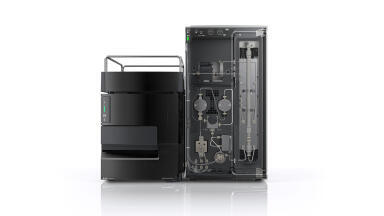
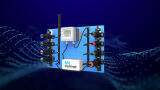
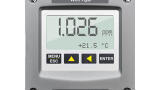
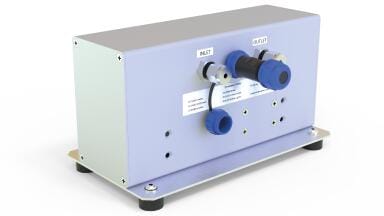
UK based Analytical Technology (ATi) has announced that its ground-breaking Q45N Dissolved Ammonia Monitor can be used with ammonia-water absorption refrigeration cooler systems. A completely new approach to on-line monitoring of ammonia, the Q45N dissolved ammonia monitor can be used in a wide range of applications including waste water treatment, potable water treatment, river and stream water quality and refrigeration coolers.
Many refrigeration cooler systems use ammonia-based heat exchangers. These ammonia chillers are used in a variety of applications including dairies, breweries and beverage manufacturers. Widely used in the 1960s,
ammonia-water absorption refrigeration cooler systems fell in popularity due to low efficiencies and safety concerns: leaks in the heat exchanger can cause ammonia to escape into the water supply. However, the technology has now evolved to nearly double the efficiency of old systems, leading to their gain in popularity.
Concerns about the safety of using ammonia, especially where ammonia contamination of food products is a risk, can be allayed by using the ATi Q45N Dissolved Water Monitor. Continuous monitoring of ammonia in water and waste water streams is becoming increasingly important for
plant operations and process control yet conventional online monitors can be expensive, complex and labourintensive. In the food and beverage industries, safety is allied with cost and efficiency as one of the paramount concerns.
The Q45N Dissolved Ammonia Monitor from ATi uses reaction chemistry to convert ammonia in a solution to a stable monochloramine compound which is then measured with a unique amperometric sensor. ATi’s Q45N monitoring package provides the measurement stability needed to
avoid complicated automatic calibration systems and, thanks to ATi’s technology, the amperometric sensor provides excellent repeatability over long periods of time. As the measurement utilises chloramine conversion for measurement, the sample is inherently subjected to biocidal conditions, eliminating long term biofouling on the sensor.

 Product directory