Water/wastewater
Published over 16 years ago. See the latest and most current information on Water/wastewater.
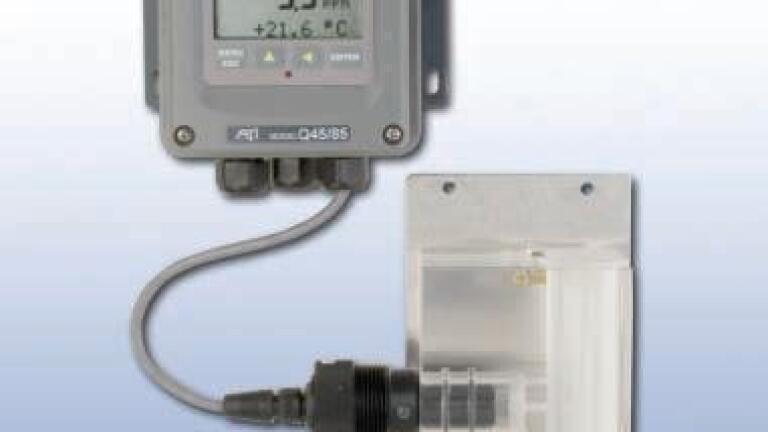
Specialist electrochemical sensor manufacturer Analytical Technology Inc (ATi) announces the launch of the Q45/85 Peracetic Acid Monitor. Peracetic acid (PAA) is an extremely strong oxidiser that is employed in a wide range of industries for the disinfection of systems and equipment. Analytical Technology’s new Peracetic Acid Monitor enables on-line measurement of residuals of PAA in disinfection systems. A free-of-charge product brochure can be downloaded via www.analyticaltechnology.com.
As peracetic acid produces no harmful breakdown products, it is widely used in the food industry for the disinfection of piping systems and processing equipment. It is also used for spray washing of food products and
disinfection of water systems. With any disinfection system, maintaining proper residual levels is essential to pathogen control. Analytical Technology has developed the Q45/85 Peracetic Acid Monitor in order to facilitate reliable chemical control and provide real-time measurement of low levels of PAA in solution.
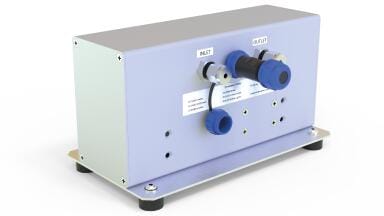
Analytical Technology’s Q45 monitoring systems use a membrane-covered polarographic sensor that does not require the addition of chemical reagents. The Q45/85 Monitor does not contain any moving parts, pumps or motors that can burn out, or tubing breaks that require constant maintenance. Analytical Technology’s Peracetic Acid Monitor sensors are available in two configurations, flowcell or submersion. The constant-head flowcell sensor is used to maintain a constant flow rate and pressure at the face of the sensor for flow rates of at least seven gallons per hour. Alternatively a low volume flowcell can be supplied for clean water applications with flow rates of between one and three gallons per hour. The submersion sensor requires flow velocities of at least 0.4ft per second for effective operation.
The new monitor is available as an AC-powered analyser, loop-powered transmitter or battery-operated portable version, ensuring that the monitor is well-suited for almost any peracetic acid measurement. A portable data-logging version is also available for temporary installations or process studies.
IET Guide 2026

 Product directory