Water/wastewater
Published over 5 years ago. See the latest and most current information on Water/wastewater.
Many types of oils and grease from cooking, maintenance and cleaning, and manufacturing enter wastewater. To maintain regulatory compliance, you must quantify and reduce these contaminants from wastewater before the water can be discharged back into the environment. If you are working in this industry and need to test for oil and grease, know that it’s a time-consuming and a strictly defined testing method. There are two approved methods that can be used for this type of analysis; both require the use of hexane as the extraction solvent. And you can automate your extraction process to save you time.
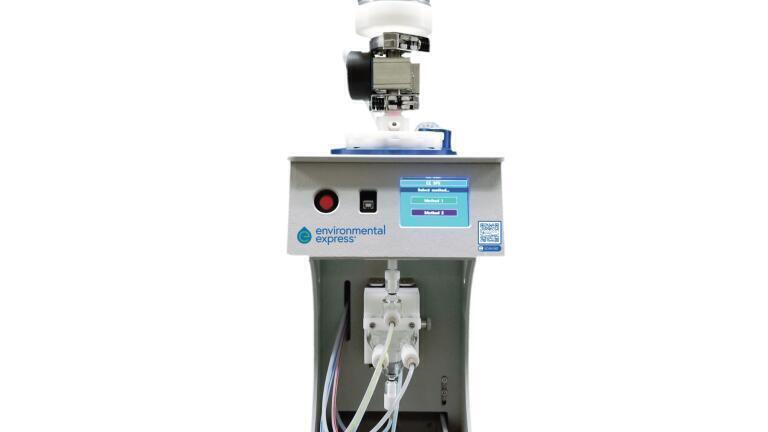
If you want to expedite your analysis, you can use an instrument like the Environmental Express SPE-Express 2 that automates the extraction process. The system is fully enclosed and doesn’t require its own fume hood. This unit is the only system to extract the sample and evaporate the n-hexane, eliminating the transfer step. It uses a fluid sensor to verify the sample vessel is empty which improves accuracy. Plus, you will be able to run multiple samples simultaneously on up to six stations, increasing efficiency.
Only two approved methods are available to analyse oil and grease: (Environmental Protection Agency) EPA Method 1664 (A and B) and (Standard Method) SM5520 B/F.
One final step to keep in mind—always acidify your blanks and other standards. Failure to do so will result in incomplete recovery of your standards.
For further information contact us here
IET Guide 2026
 Product directory