Water pollution monitoring
Published over 12 years ago. See the latest and most current information on Water pollution monitoring.
An Australian council will have to pay a large fine and legal costs after it pleaded guilty to committing water quality offences. Forbes Shire Council will now have to pay AUS$165,000 (£91,656) in fines and AUS$47,000 in legal costs and after pleading guilty to two charges in the Land and Environment Court.
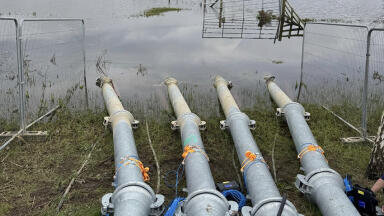
The council admitted to pumping water from an effluent dam between the dates of June 23rd and July 9th 2012. The dam at the Central West Livestock Exchange, New South Wales, had been overflowing, prompting pumps to be used to transfer water to an irrigation area and an adjoining property.
Following the pumping, the effluent spread across an animal paddock, flowing into a drainage line before making its way into three livestock dams on the neighbouring property.
Action was taken against the council by the Environment Protection Agency (EPA) following the incident. The court was told that by drinking the contaminated water, cattle on the neighbouring property could have contracted Bovine Johnes disease, causing a number of health problems and affecting the owner financially.
Of the total fine amount, AUS$35,000 is charged for failing to inform the EPA of the incident once the council had become aware of it. The other AUS$130,000 fine has been awarded for the water pollution itself. The council must also pay for the legal costs the case has created.
According to Brian Steffen, the council's general manager, the pollution was caused by heavy rain making the effluent dam overflow in the first place and human error when it came to dealing with issue. He also said that following the incident, the council has put in place a plan for responding to pollution as well as a wastewater management plan. A scheme has also been created for the reuse of effluent water.
Gary Whytcross, New South Wales EPA director of the south branch, said: “There was a failure on behalf of council in managing the effluent material at the Livestock Exchange. The extent of the water pollution could have been easily avoided if council had installed the correct effluent control systems and had appropriate monitoring procedures in place from the beginning.
“Not only did the actions and inactions of council pose a risk to the environment, they also posed a risk to livestock which use downstream dams."
IET 36.5 Sept/Oct 2026

 Product directory