Wastewater analysis
Published over 8 years ago. See the latest and most current information on Wastewater analysis.
With the next AMP period on the horizon, many utilities are anticipating lower phosphorus discharge consent limits on their wastewater treatment works. Technical experts in each utility are aiming to maximise their phosphorus removal capability using existing assets.
Up until now, the best available real-time control systems have been based on phosphorus loading, requiring monitoring with a phosphate colorimeter at the inlet to the works; which is a challenging place to perform colorimetric analysis even with dedicated filtration setups.
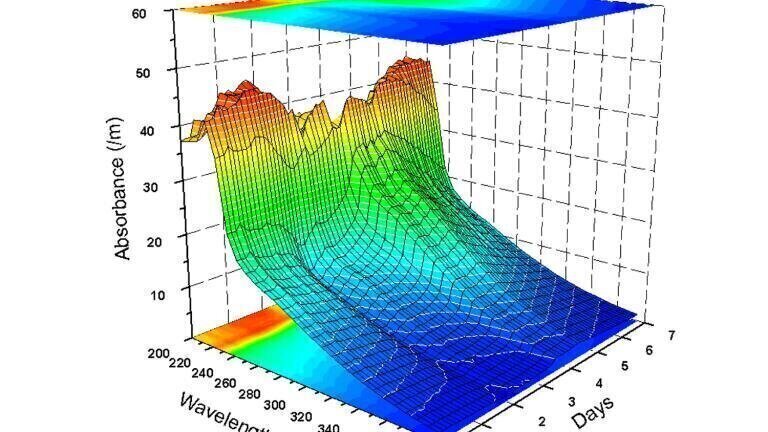
Compass CPR is a more comprehensive approach that determines all the coagulant demand in the wastewater in real time. It then uses this information, along with the phosphorus loading, to optimise coagulant dosing. Additionally, as the Compass CPR system determines coagulant demand by using full UV-Vis spectroscopy, changes in the nature of the organics in the incoming load are characterised. Dose rate is calculated using sophisticated Compass algorithms. There is rarely, if ever, a need to go back and ‘tweak’ the calibration once a site has been modelled.
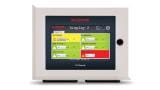
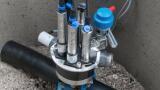
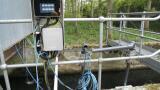
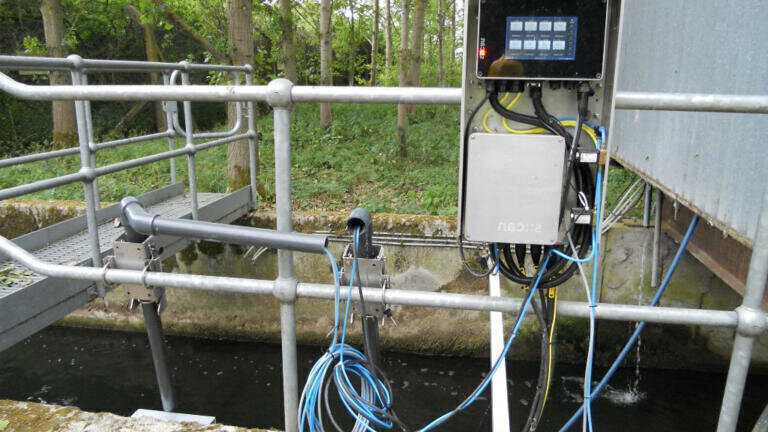
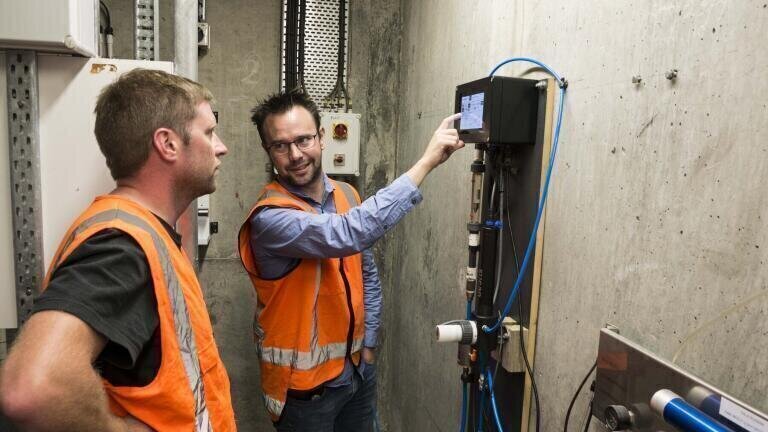
The system is a feed-forward control system comprising of a UV-Vis spectrophotometer, directly inserted into the inlet channel of a wastewater treatment works. Optimal optical performance is achieved via either compressed air or brush-based auto-cleaning mechanisms. Careful positioning along with protective housing minimises ragging issues. Every two minutes, a full scan (200-750nm) across the UV-Vis spectrum is carried out. By analysing this data and inputting that information into the Compass CPR software, the coagulant demand associated with the organics and suspended solids is determined and a dose rate calculated. With up to 70% of coagulant demand in wastewater associated with these two components, a system that doesn’t measure this cannot truly optimise dosing. The sensor is connected to an IP65 rated controller which is home to the Compass CPR software. The output from the controller can be a 4-20mA signal, or Modbus, Profibus or another format, but always in terms of coagulant dose in for example mg/l or ppm.
Two approaches are possible.
If there is an existing phosphate colorimeter on site which the operators are happy to use, Compass CPR can simply pull the phosphate result from that into the controller to be used in the algorithm.
If there isn’t, or the colorimetry approach previously hasn’t been successful at that site, using statistical analysis and the basis of co-occurrence, the phosphate loading can be estimated to a reasonably high degree of accuracy, certainly enough for dosing control. This approach means no more colorimetry, no more reagents and no more blocked tubing!
For an industry aiming to maximise phosphorus removal utilising their current assets, whilst minimising opex and ensuring metals discharge compliance, Compass CPR offers a new approach to automatic coagulation control in wastewater treatment works.
Click here for further information on Compass CPR or contact PMA by email and ask to trial Compass CPR before you buy.
For more information on the range of products PMA can offer, and how they are being used in different applications, check out the PMA blog.
IET 36.5 Sept/Oct 2026


 Product directory




.jpg)