Microplastics analysis
In doing so, it demonstrated an analytical method that finally makes this behaviour measurable.
Polybutylene adipate-co-terephthalate, or PBAT, is promoted as a more sustainable alternative to conventional plastics and is increasingly used in packaging and agricultural films.
Yet questions remain about how quickly it breaks down under real-world conditions and what chemical by-products are released in the process.
Until now, these questions have been difficult to answer because PBAT microplastics are hard to extract from and quantify in soil systems.
Researchers from Nanjing Normal University and Nanjing University have developed a method that directly addresses these challenges.
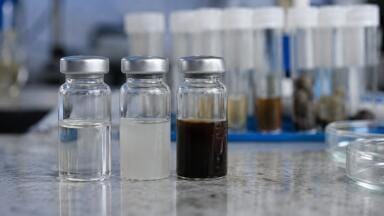
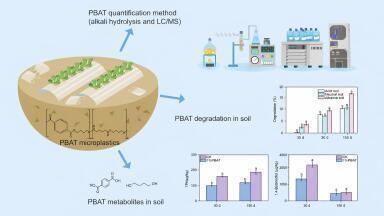
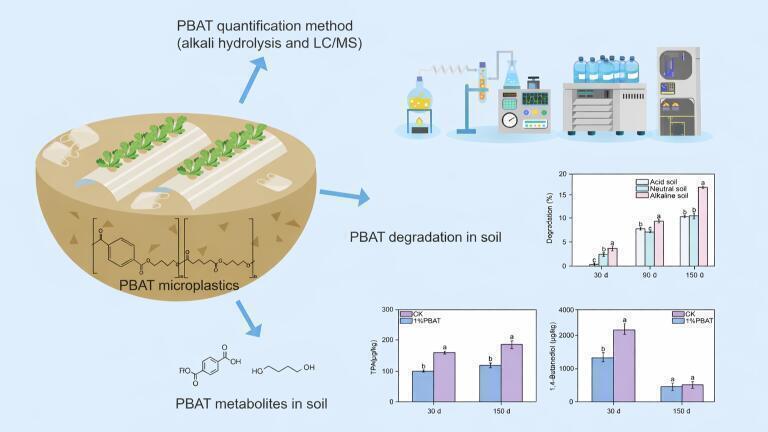
Their approach combines thermal-assisted alkali hydrolysis with liquid chromatography–mass spectrometry (LC–MS), enabling PBAT to be quantitatively depolymerised into its monomer, terephthalic acid (TPA), which can then be measured precisely.
The protocol uses 1-pentanol and potassium hydroxide, reduces processing time to around an hour, achieves more than 90% hydrolysis efficiency, and avoids harsh solvents.
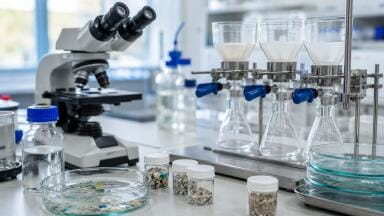
Because it bypasses the need to physically extract microplastic particles from soil, it provides a cleaner, more reproducible way to quantify PBAT residues.
Using this method, the researchers incubated PBAT microplastics in acidic, neutral and alkaline soils for 150 days.
They found that PBAT degraded slowly across all conditions; only 10–17% after five months.
Alkaline soils showed the highest degradation rate (17.1%), linked to higher lipase activity, an enzyme group known to break down polyester-based polymers.
The study also tracked degradation products, identifying terephthalic acid and 1,4-butanediol as the dominant metabolites.
Notably, butanediol accumulated in some soils to levels that could temporarily stress soil organisms.
From these data, the team estimated a PBAT half-life of roughly 453 days in alkaline environments, underscoring that ‘biodegradable’ does not necessarily mean rapid disappearance.
This work has direct implications for environmental monitoring.
First, it fills a longstanding analytical gap.
Biodegradable plastics have been difficult to include in soil monitoring programmes because they lack simple, measurable indicators.
By converting PBAT into a consistent molecular marker (TPA), the new method creates a pathway for laboratories to quantify PBAT residues using standard LC-MS platforms already deployed for organic contaminant analysis.
This shifts PBAT from a poorly characterised pollutant class into one that can be routinely monitored.
Second, the study provides clear monitoring targets.
Both TPA and 1,4-butanediol can serve as chemical indicators of PBAT presence and degradation stage.
Monitoring these metabolites allows programmes to assess not just the persistence of PBAT, but also the behaviour and accumulation of intermediate compounds with possible ecotoxicological relevance.
Third, the findings highlight the need to monitor biodegradable plastics in agricultural soils.
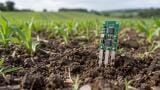
PBAT is widely used in mulch films, yet the study shows it can persist for more than a year and release small molecules detectable at mg kg⁻¹ levels.
This has implications for soil health assessments and compliance monitoring around agricultural plastic use.
Soil pH and microbial activity, which strongly influence degradation rates, also become measurable variables that can be integrated into broader soil-quality monitoring frameworks.
Fourth, the method aligns with existing monitoring infrastructure.
Laboratories that already analyse pesticides, PFAS, or other organic pollutants can incorporate PBAT-derived markers without new instrumentation.
This enables harmonised monitoring across conventional and biodegradable microplastics and supports the development of long-term datasets tracking plastic burdens in soils.
Finally, the study contributes to regulatory evaluation. As policymakers consider standards for biodegradable materials, real-world degradation data and quantifiable indicators are essential.
The ability to measure PBAT and its metabolites offers evidence that can be used to verify manufacturer claims and guide decisions on where biodegradable plastics are appropriate or where their deployment may need stricter oversight.
In effect, the study does more than establish how PBAT behaves in soil.
It provides the analytical foundation necessary to integrate biodegradable microplastics into environmental monitoring systems, turning an emerging concern into a measurable, trackable component of soil contamination assessments.
IET 36.5 Sept/Oct 2026


 Product directory