Gas detection
Published over 13 years ago. See the latest and most current information on Gas detection.
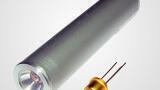
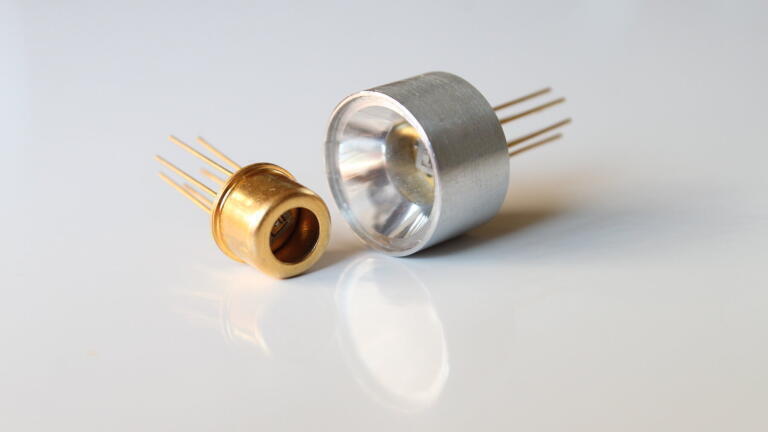
LED Microsensor NT (Russia) is a manufacturer of Mid Infrared Light Emitting Diodes (LEDs) and Photodiodes (PDs) for spectral range 1600..5000 nm. Possessing remarkable features (low power consumption, small sizes, rapid response time, long lifetime, ability to perform multicomponent analysis, low cost), Mid Infra-Red LEDs have certain benefits compared with existing types of Infrared sources (broadband heating IR sources, laser diodes). Full stage production facility (from epitaxial semiconductor growth to packaging, and QC testing) enables us to produce Mid Infrared LEDs for various sensing applications, including gas monitoring, medical diagnostics, control of technological processes, etc.
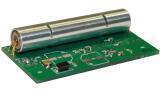
Now we announce the release of evaluation systems for CO2 and CH4 detection (CDS-3 and MDS-3 types). These systems include three-pass diffusion type gas chambers with built-in LED-PD optopairs and related electronics for LED driving and PD signal amplification. Evaluation sets enable carrying out fast experiments with CO2 and CH4 analysis, demonstrate possibilities of mid infrared diodes for such applications: low power consumption, short response time and long lifetime. Our products are represented by Alfa Photonics Ltd (Latvia) – our contact window for international customers.IET Guide 2026

 Product directory