Environmental laboratory
Published over 12 years ago. See the latest and most current information on Environmental laboratory.
In efforts to ensure safe and healthy food, two leading European food testing laboratories are collaborating with Thermo Fisher Scientific (USA) at the company’s new Pesticide Analysis Center of Excellence to improve methods for detecting and measuring pesticide residues in food.
The European Union Reference Laboratories (EURL) for Residues of Pesticides in Fruits and Vegetables at the University of Almeria, Spain, is focusing its collaboration on developing a method that uses Thermo Scientific Q-Exactive Orbitrap LC-MS technology to screen, quantify and confirm hundreds of analytes in a single run. Another goal is to eliminate matrix interferences from a variety of food samples. The EURL is working to ensure consistency across food control laboratories and to contribute to the development of standardised analytical methods.
“We believe high resolution accurate mass mass spectrometry can bring significant improvements into day-to-day pesticide analysis,” said Professor Amadeo Rodriquez Fernandez-Alba of the Almeria lab. “The capability to provide very accurate mass measurement along with excellent sensitivity and confirmatory information would improve lab throughput significantly, and would allow for more effective pesticide residue monitoring.”
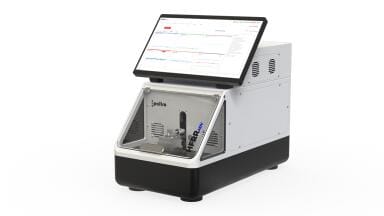
The other collaboration, led by Richard Fussell, senior scientist at the UK Food and Environment Research Agency (FERA), a UK national reference lab, is focused on trace level analysis of more than 150 targeted pesticide residues in a variety of foods, using the Thermo Scientific TSQ 8000 triple quadrupole pesticide analyser. FERA provides analytical data to the government, international organisations and the private sector, among other duties.
“Our aim is to take advantage of the selectivity and sensitivity of the latest GC triple quadrupole technology to develop robust methods that use less intensive sample preparation steps,” Fussell said.
IET 36.5 Sept/Oct 2026





 Product directory