Environmental laboratory
Published over 14 years ago. See the latest and most current information on Environmental laboratory.
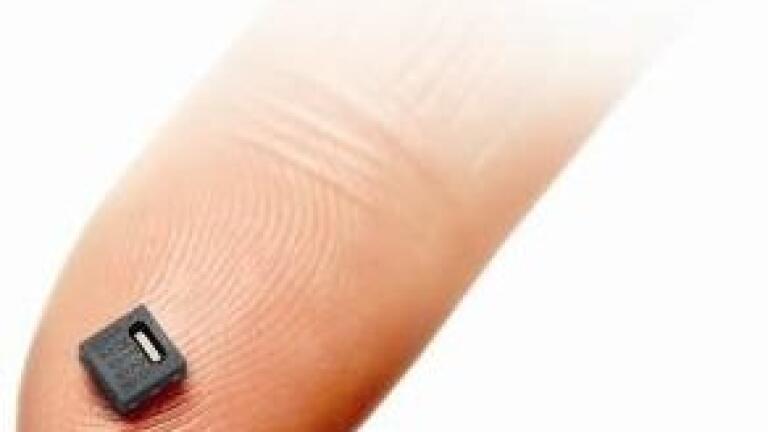
Sensirion (Switzerland), manufacturer of humidity and temperature sensors, is presenting the SHT20 humidity and temperature sensor at this year’s Sensor+Test trade fair. The SHT20 is a low-cost member of the SHT2x family of sensors, which are already being used in the millions in various applications. With a typical accuracy of 3% RH, the new sensor is especially suitable for price-sensitive applications and shows that high production volumes can be combined with low cost and proven quality.
The SHT20 humidity and temperature sensor boasts the same impressive features as the standard version. It is distinguished by high long-term stability, full calibration and both digital and analog interfaces. The sensor is based on the unique CMOSens technology, which enables high production volumes with excellent value for money. The minimum order quantity is 1,500. Despite being significantly less costly than its predecessor, depending on purchase volume, the sensor offers excellent temperature measurement accuracy of ±0.4 °C and a measuring range of -40 to +120 °C. With a 3x3-mm footprint and 1.1-mm profile, it is one of the smallest sensors in its class. These properties make it the first choice for many applications.
IET 36.5 Sept/Oct 2026





 Product directory