Environmental laboratory
Published over 8 years ago. See the latest and most current information on Environmental laboratory.
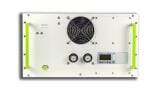
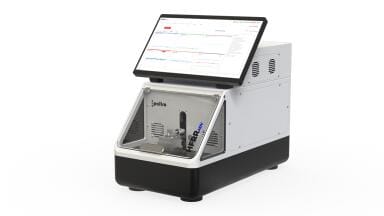
Riken Keiki have announced the introduction of a new“Calorific Value, Specific Gravity and Wobbe Index” measuring instrument.
The OHC-800 utilises“Opt-Sonic calculation” which is applied by using an optical sensor and a sonic sensor. “Opt-Sonic calculation” is based on the calculation combining 2 measuring results obtained by the 2 sensors. Opt-Sonic is a term coined by RIKEN KEIKI to describe Optical and Sonic sensors. This can minimise the interference effects on the reading caused by interference from gases such as N2, O2, CO2 etc. and enable a highly accurate and reliable measurement.
Riken Kikei have ensured that it is easy to switch the display among "Calorific value", "Density" and "Wobbe index", by a simple press of a button. There is no need for laborious calculations and the OHC-800 also includes a self-diagnosis function, including a fault diagnostic feature to prevent the calorimeter from operational failures.
Running costs are low, which is helped by the fact that few consumables are need. This instrument’s compact and robust design enable installation of the OHC-800 at all kinds of difficult locations, using 100VAC, 240VAC or 24VDC power supplies
IET 36.5 Sept/Oct 2026





 Product directory