Environmental laboratory
Published over 16 years ago. See the latest and most current information on Environmental laboratory.
New atomic spectroscopy platform offers advanced, user-friendly parts-per-trillion range detection capability for a diverse range of applications
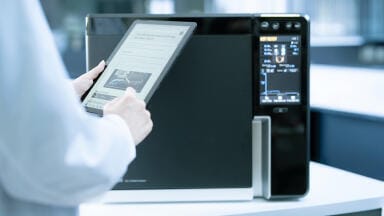
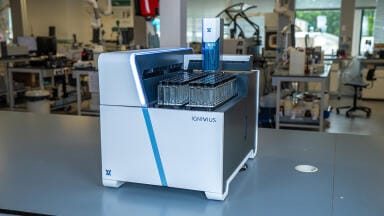
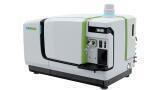
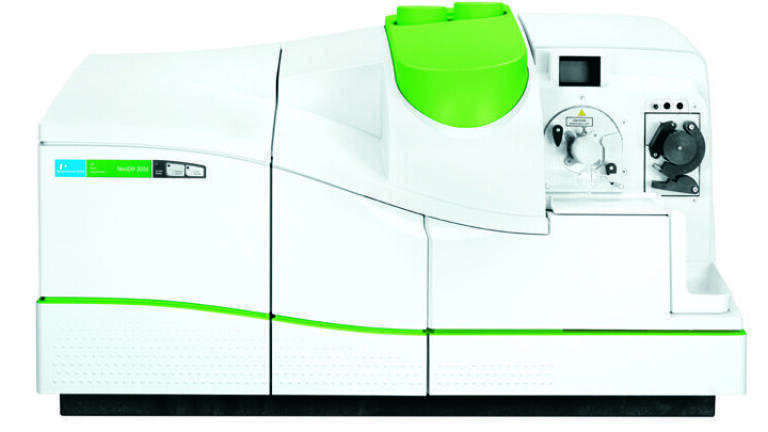
PerkinElmer (USA) announce the European launch of the NexION™ 300 Inductively Coupled Plasma-Mass Spectrometer (ICP-MS) for elemental analysis at Analytica 2010, March 23-26, 2010, Hall A2, stand 401.
“The NexION 300 platform advances trace element analysis, and its introduction is perfectly timed to help address global problems ranging from contamination of our air, water and food to the integrity of pharmaceuticals and nutritional supplements, as well as the safety of emerging nanomaterials,” explained Martin Long, vice president, spectroscopy, PerkinElmer.
He added, “Researchers can now benefit from a simplified system for analysis of trace elements in the parts-per-trillion range, allowing even non-expert users to perform complex analyses. The new NexION 300 system also greatly reduces the need for daily user maintenance and cleaning, translating into minimal downtime and less need for highly-skilled operators."
The NexION 300 instrument features patented Universal Cell Technology™ (UCT) and is the only instrument of its kind with three modes of interference removal - Standard, Collision and Reaction. These three modes allow scientists to choose the appropriate technique for their particular application, based on the complexity of the problem to be solved.
NexION’s Standard mode can be used for simple and routine analyses. Collision mode is effective for semi-quantitative analyses, environmental sample monitoring and testing unknown samples. Reaction mode, using patented DRC™ technology, provides the best detection limits available, for even the most difficult elements and matrices such as semiconductor testing.
The NexION 300 system can be integrated with chromatography systems for effective speciation analysis to enable customers to accurately separate and measure the toxicity, bioavailability, metabolism and environmental mobility of elements.
IET 36.5 Sept/Oct 2026



 Product directory