Environmental laboratory
Published over 7 years ago. See the latest and most current information on Environmental laboratory.
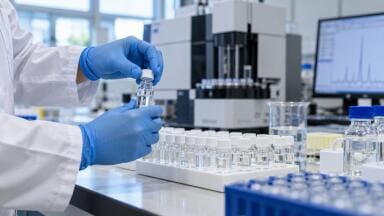
Many laboratories are still using Cold Vapour Atomic Absorption (CVAA) or ICP-MS to perform mercury analysis. Although both of these methodologies have proven effective, they do pose a number of laboratory and environmental challenges. The most important being that both require costly, laborious sample preparation and generate significant amounts of hazardous waste. Additionally, obtaining accurate and reproducible data can be problematic given mercury’s volatility.
EPA Method 7473 enables the operator to perform mercury analysis on numerous sample matrices using a direct combustion technique.
This method requires no sample preparation and results in substantial time savings. Direct Mercury Analysis gained popularity for analysis of total Hg, because of its ability to analyse both liquid, solid and gas matrices effectively, to obtain high sample throughput, and low detection limits and costs.
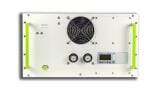
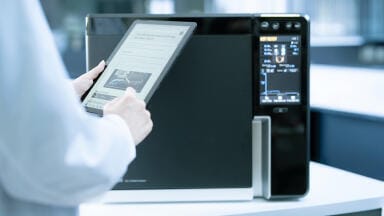
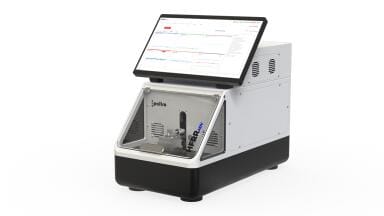
Both ICP-MS and Direct Mercury Analysis provide similar good results. However, Milestone’s DMA-80 evo allows operators to overcome some common issues of the ICP-MS such interferences and carry over and it eliminates any sample preparation step and manual cleaning cycles.
IET 36.5 Sept/Oct 2026



 Product directory