Environmental laboratory
Published over 11 years ago. See the latest and most current information on Environmental laboratory.
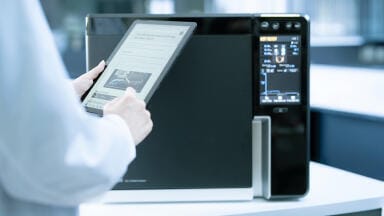
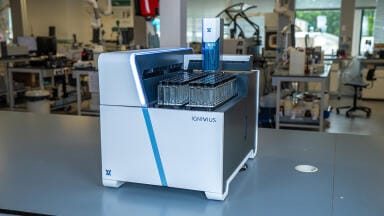
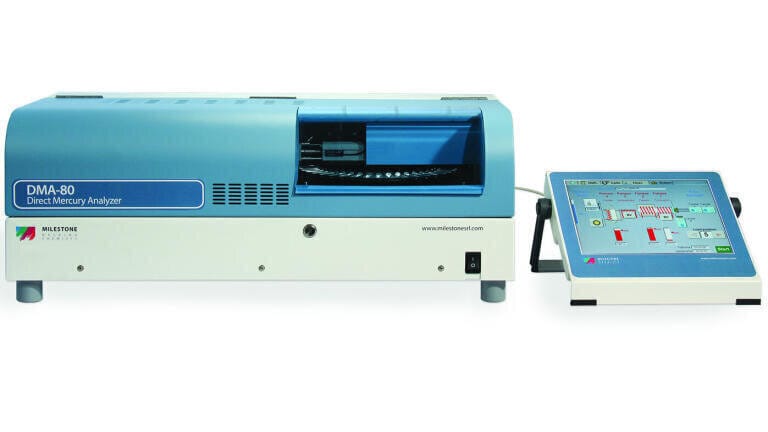
DMA-80 Direct mercury analyser is designed to eliminate sample prep and memory effect problems and yield accurate, reproducible results in less than six minutes, consequently increasing the productivity of the lab while drastically reducing costs.
Most labs planning to bring direct mercury analysis in house consider four factors:
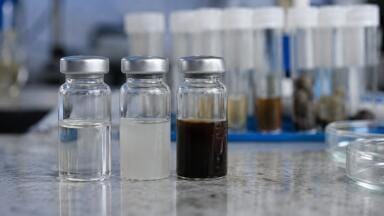
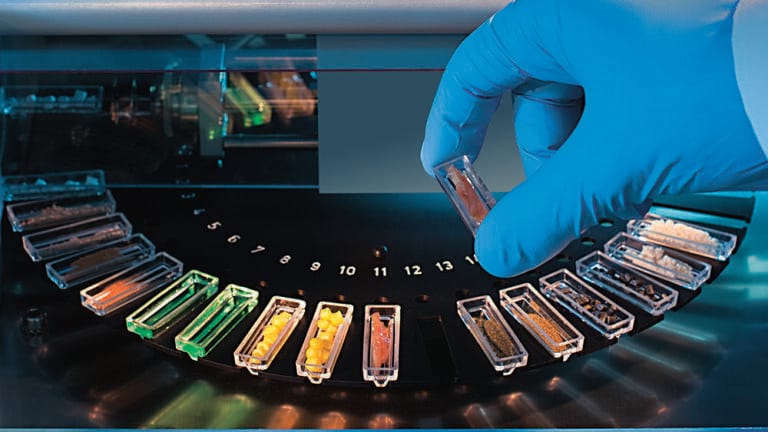
The DMA-80 can analyse solid, liquid and gas samples with equal precision over a wide dynamic range. Analysis takes only five minutes per sample and requires no sample preparation so the need for any acid digestion or wet chemistry sample treatment is eliminated. This means ease of use, low running costs and no need for hazardous chemicals to purchase, handle and dispose. Moreover, the typical bottleneck in the analytical laboratory is eliminated and also the costs usually associated with traditional mercury techniques, such as CV-AAS, ICP-AES or ICP-MS.
The DMA-80 cost of analysis is minimised thanks to the speed of analysis, catalyst and amalgamator long lifetime, sample boats durability and the possibility of using air as combustion and carrier gas.
The DMA-80 uses the principle of thermal decomposition, mercury amalgamation and atomic absorption detection. It is extremely easy to use: Just weigh your sample, load it onto the built-in auto-sampler and press ‘start’.
Combining an innovative mercury measuring system with a unique optical path spectrophotometer, the DMA-80 achieves a detection limit as low as 0,001 nanograms of mercury and is capable of measuring up to a concentration of 300 mg/kg (300 ppm).
All the DMA-80 components are easily accessible for routine cleaning and maintenance.
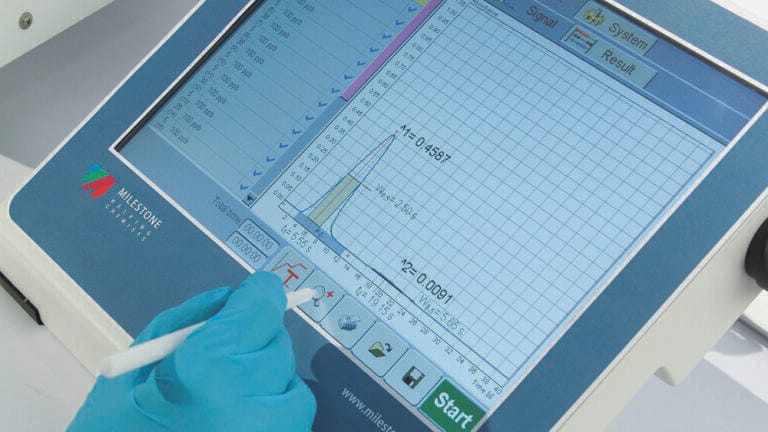
The DMA-80 can be operated through a touch screen terminal or by using a standard PC. The EasyCONTROL software controls all the system functions, and provides valuable feedback on the instrument’s performances.
The DMA-80 has been used to develop the US EPA method 7473 (Mercury in solids and solutions by thermal decomposition, amalgamation, and atomic absorption spectrophotometry).
It is furthermore compliant with ASTM method D-6722-01 (Total mercury in coal and coal combustion residues) and ASTM method D-7623-10 (Total mercury in crude oil).
DMA-80 Benefits
Productive
Sensitive
Efficient
Convenient
Cost-Effective
Flexible
Click here for further information.
IET 36.5 Sept/Oct 2026


 Product directory