Environmental laboratory
Published over 16 years ago. See the latest and most current information on Environmental laboratory.
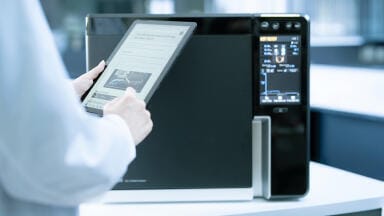
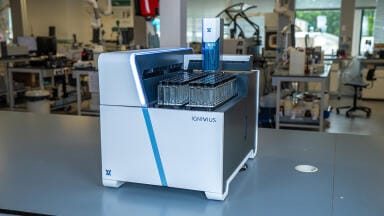
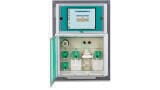
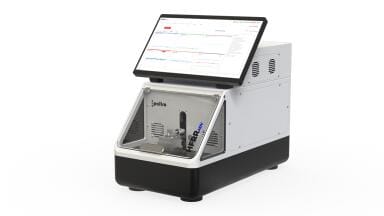
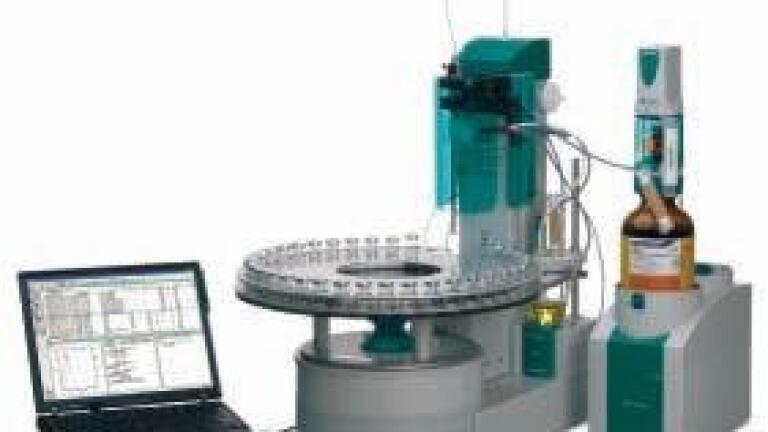
The 874 USB Oven Sample Processor is the new Metrohm instrument for automatic thermal sample preparation in Karl Fischer titration. Features include a sample rack that can be adjusted to the user’s own sample vessels and the possibility to determine the optimum oven temperature even for unknown samples. The 874 USB Oven Sample Processor can be combined with a wide range of titrators for volumetric and coulometric water determination.
The oven method is suitable for «difficult» samples, such as plastics or salts, which release their water very slowly or only at elevated temperatures and are therefore not suitable for direct KF titration. As the sample does not enter the titration cell, side reactions with the KF reagents used are excluded.
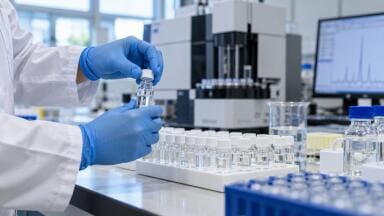
Samples to be analysed are weighed out into vials, which are hermetically sealed with a septum and placed on the rack. The vials are heated in an oven to release the water. A double hollow needle pierces the septum and a stream of carrier gas transports the moisture to the titration cell for subsequent analysis. With the 874 USB Oven Sample Processor users can record the heating curves of unknown samples. These curves can be used to determine the optimum temperature for analysis.
IET 36.5 Sept/Oct 2026




 Product directory