Environmental laboratory
Published over 10 years ago. See the latest and most current information on Environmental laboratory.
New technologies, geographies and regulations are creating an ever changing market for mercury removal from exhaust stacks and process gases. This is the conclusion of the McIlvaine Company in N056 Mercury Air Reduction Market.
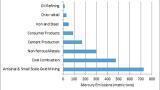
The largest application is coal-fired boilers. Natural gas purification, sewage sludge incinerators, waste-to-energy plants and other facilities are significant purchasers. There are continuing geographic shifts. Tough rules for waste-to-energy plants have been adopted worldwide. Regulations for coal-fired power plants in the U.S. are stringent. The rest of the world is moving to emulate the U.S. Since China has five times as many coal-fired boilers as the U.S, it presently represents the largest geographic growth potential.
Many new developments are likely to change the mix of systems and products which are purchased. Activated carbon in powder or granular form is the most commonly applied technology. Improvements in carbon are creating more cost effective solutions. When carbon is injected into the scrubber recycle slurry, it serves to separate the mercury in the slurry.
Ionic liquids are being applied to pellets and promise advantages over carbon beds for natural gas purification. There is now investigation into using ionic liquids in dedicated wet scrubbers.
Wet scrubbers are used for acid gas removal in most applications involving mercury. Chemicals to improve mercury capture make scrubbers a primary technology for mercury removal. Waste-to-energy plants in Europe use scrubbing technology not only to capture mercury but also to recover hydrochloric acid and valuable metals. McIlvaine has suggested that a variation of this technology is likely to provide the cheapest source of rare earths. Coal-fired power plants could generate significant revenues and eliminate air and solid waste pollution with this process.
Click here for more information on Mercury Air Reduction Markets.
IET Guide 2026

 Product directory