CEMS
Published over 11 years ago. See the latest and most current information on CEMS.
The markets for air pollution control equipment and services are continuing to expand in Asia while leveling off in Europe and the U.S. This is the conclusion reached by the McIlvaine Company in Air Pollution Management. This report provides a continuing summary of the analyses provided in more detailed reports also published by McIlvaine (USA).
The market for fabric filters in Asia is much larger than other regions. Expansion in cement, steel, and waste-to-energy continues to provide a market boost. The biggest variable in this market is the potential requirement for power plants to gut their precipitators and insert bags. The tough regulations are impacting not only the U.S. but China, and parts of Europe, Africa and South America. Conversions have been made in South Africa, Italy, Russia and Chile.
There is uncertainty relative to the extent this will be required in China and the U.S. If most of the plants were required to insert filters, the total filter market would nearly double.
Waste-to-energy and sewage sludge incineration continues to be a market for wet scrubbers although dry scrubbing is making inroads. The two approaches are also competing in the cement industry. Dry scrubbing is making inroads in coal-fired power plants which have traditionally opted for wet limestone scrubbing.
The market for NOx reduction has soared in China and is now leveling off. But the level is quite high and makes NOx control a leading air pollution control segment. Power plants are the biggest purchasers but cement, waste-to-energy and other plants with combustion operations are installing some NOx control as well.
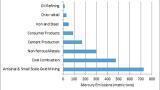
Mercury reduction has been the biggest growth segment. New regulations have been promulgated and will require compliance in the coming months in the U.S. This will create a big market for activated carbon and fuel chemicals such as bromine. A number of innovative options are also under development.
While the market for dry precipitators is not promising, there is growth for wet precipitators. The WESP can follow a wet scrubber and remove SO3 and fine particles.
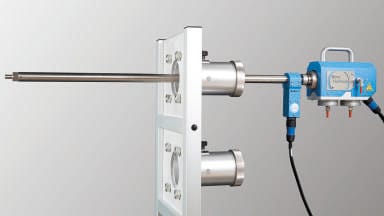
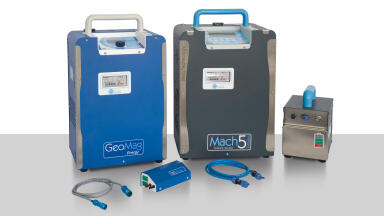
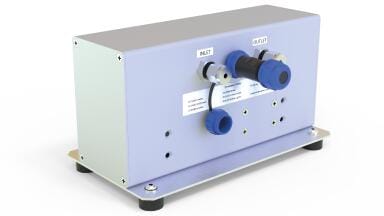
The markets for continuous emissions markets are growing robustly due not only to the requirements to prove compliance but as process tools. One approach uses a mobile CEMS which can supplement the stack CEMS and measure performance across various pieces of equipment. An alternative is multiple sample lines which allows the stack CEMS to monitor multiple locations.
IET Guide 2026

 Product directory
















.jpg)