The latest thermal imaging equipment from Ashtead Technology Rentals helped play a major role in a number of assignments for Trees Project Ltd, a new company in the tree care industry.
Trees Project is an off-shoot initiative of Nottingham Trent University and is led by Dr Marcus Bellett-Travers, who has more than 20 years experience in tree management.
He contacted hire firm Ashtead Technology Rentals shortly after starting the venture, which aims to provide management options to landowners to avoid financial and public risk by updating the evaluation of tree health and their care in the UK.
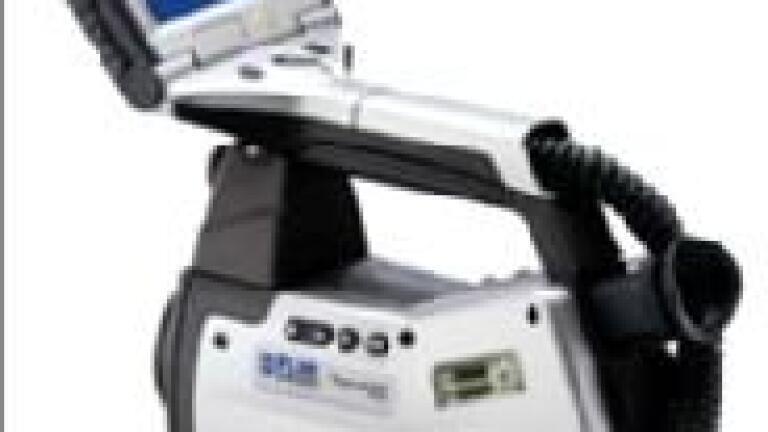
When he needed thermal imaging technology in order to carry out a ‘health check’ of trees which required examination, Marcus contacted Ashtead Technology Rentals who were able to provide the FLIR ThermaCAM P65. The instrument is an advanced thermal imaging camera and an ideal hire solution for applications such as thermal research and investigations for predictive maintenance, heat loss surveys and manufacturing. Traditionally, tree investigations have been visual inspections combined with an intrusive test on the tree where disease is suspected, but the new infra-red method can provide a more efficient, accurate and faster appraisal without having to harm the tree.
Marcus explains, “We needed the latest equipment available and an instrument which was going to provide us with the findings we required. Ultimately, our aim is tree preservation and in order to achieve this, thermal imaging provides a quick, non-invasive health check of the whole tree.
“This method is not only used to determine the extent of decay but also the amount of healthy tissue present that will contribute to the continued survival of a particular tree. Parts of the tree that are healthy have an even distribution of heat at the surface and so when the wood is altered by physical damage or by the actions of pathogens, distinct cooler and warmer areas are identifiable through infrared analysis of the surface of the tree.

 Product directory