Environmental laboratory
As we continue to bring some of the industry's leading lights to our readers, today, we're talking to Emma Thorpe of ALS Laboratories (UK) Limited.
I’m Emma Thorpe, a Principal Scientist with 15 years' experience in the environmental laboratory testing industry.
I specialise in inorganic analytical chemistry, with a current focus on method development, cross laboratory collaboration and technical problems for testing company ALS Laboratories (UK) Limited.
I love getting into more detailed work and solving problems, and still manage to spend some time at the lab bench.
I’ve always been drawn to science. Especially chemistry, which I studied at degree level.
It was during university that I became more aware of the environmental impact of industrial processes.
I was lucky enough to have two summer work experience opportunities in laboratory settings and I’ve never really looked back since.
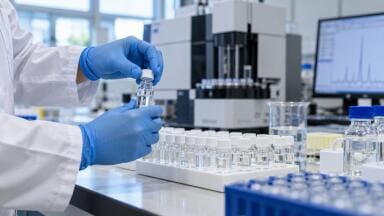
For most of my career I’ve spent it working in laboratories carrying out testing for water utility companies, where we test to meet environmental and drinking water regulations.
I think we’ll see a significant shift towards real-time monitoring and automation. Especially with the integration of AI and machine learning in data analysis.
There’s also growing pressure for tighter regulations. Alongside this there's a drive for more sensitive detection limits.
This will push innovation in instrumentation and method development.
I believe sustainability will be of increasing importance, not just in what we test, but how we operate as labs.
Laboratory work is often routine, but it has its share of surprises.
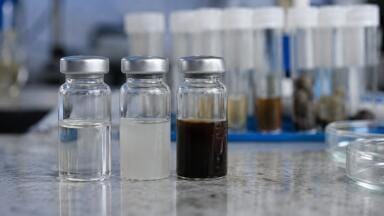
There's been some head twisters where sample appearances were deceptive.
But also occasionally some stomach turning samples.
Some of the most unexpected things can show up in environmental samples unfortunately.
Prior to becoming a Principal Scientist I led a team of analysts for five years.
I found leadership a challenge, but eventually very rewarding. It is an aspect of my career that I can sometimes miss now I am no longer a line manager.
Because it matters. Every sample we test, every method we refine, contributes to a cleaner, safer world.
I also love the intellectual challenge; analytical chemistry is like solving puzzles every day, and that keeps me engaged.
I’m also fortunate to be able to work and collaborate with many other scientists and those working within the water industry at ALS, but also with the Standing Committee of Analysts.
This is a charitable organisation that develops and publishes standardised methods for sampling and analysing water, wastewater and related materials.
It supports public health and environmental protection by ensuring analytical consistency and quality across laboratories.
I’d like to continue pushing the boundaries of method development, especially in emerging contaminants.
I’m also passionate about mentoring and encouraging younger scientists in my volunteering as a STEM ambassador.
I’d also like to see even greater collaboration between laboratories.
I’m happiest when I’m outdoors.
I spend a lot of time walking in the beautiful Yorkshire countryside where I recharge.
I also enjoy time out at restaurants with family and getting stuck in with learning new DIY skills for maintaining an older property.
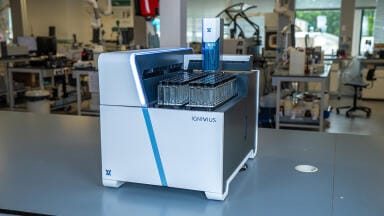
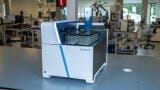
I’m an enthusiastic supporter of the increasing use of automation, particularly collaborative robotics, in the laboratory.
These technologies have the potential to streamline repetitive tasks, improve accuracy and free up scientists’ time for more complex analysis.
Anything that can standardise or simplify processes such as automated sample preparation systems or data management tools is a valuable asset in a busy lab.
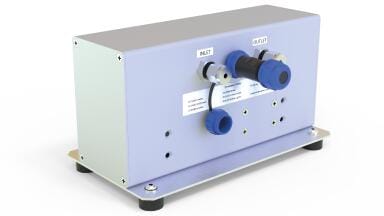
Investing in robust, reliable instrumentation is essential; downtime or errors can have significant impacts on deadlines and data quality.
I recommend that laboratories consider both current needs and future scalability when making equipment decisions.
Just that the environmental industry is full of unsung heroes.
Behind every clean river or safe soil sample is a team of scientists and many others working quietly but diligently.
It’s not always glamorous, but it’s deeply important and it’s an industry I’m proud to be part of.
IET Guide 2026

 Product directory