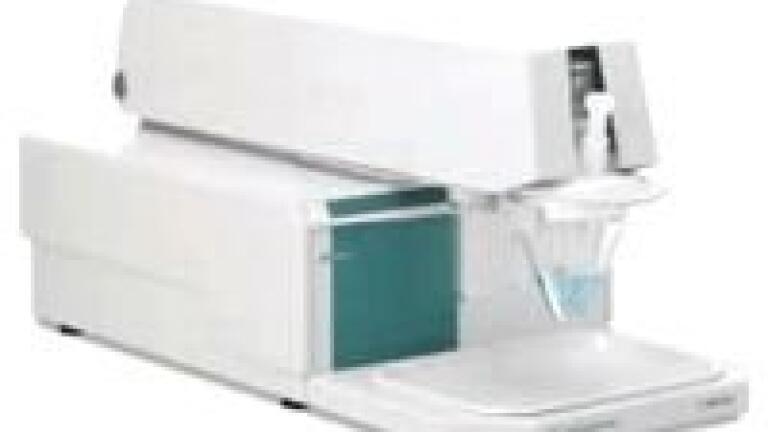
Determining trace levels of uranium in drinking and mineral water by inductively coupled plasma mass spectroscopy (ICP-MS) requires expensive analytical instrumentation. In contrast, adsorptive cathodic stripping voltammetry (AdCSV) using Metrohm`s (Switzerland)
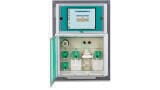
797 VA Computrace is a straightforward, much less expensive alternative allowing measurements with superior sensitivity. Uranium is radioactive, toxic and a suspected teratogen. While different national health authorities prescribe limits in drinking water ranging from 0 up to 10 ìg/L, the World Health Organization (WHO) recommends a concentration limit of 15 ìg/L.
The AdCSV method for the voltammetric determination of the uranium content is based on complexing U(VI) with chloranilic acid (CAA) at a pH between 1.8 and 2.5. After preconcentration of the uranium-chloranilic acid complex at the working electrode, the uranium content can be determined down to the ng/L range by using the differential pulse
measuring technique (DP). The determination of uranium(VI) is specific and selective, as the positive deposition potential means that other metal-CAA complexes or organic matrix components of natural waters are either not adsorbed on the working electrode or hardly adsorbed at all. The German standard DIN 38406-17 is currently being drawn up based on this AdCSV method. This means that in future the voltammetric determination of uranium can be used as a generally recognised method for monitoring drinking and mineral water in daily practice.



 Product directory

























.jpg)