Air monitoring
Published over 4 years ago. See the latest and most current information on Air monitoring.
New data released by Aeternum, a provider of low cost, unplugged sensors designed to accurately monitor air quality, finds that levels of the air pollutant nitrogen dioxide (NO2) increased by nearly a third (30%) within a mile of COP26 in Glasgow last month. NO2 levels reached a peak during the conference on 8th November, when Aeternum’s sensor recorded an average of 48 micrograms (µg) per metre cubed for the day – 93% higher than the World Health Organisation’s (WHO) 2021 Air Quality Guidelines, which recommend nitrogen dioxide levels should not exceed an average of 25µg/m³ in any 24-hour period.
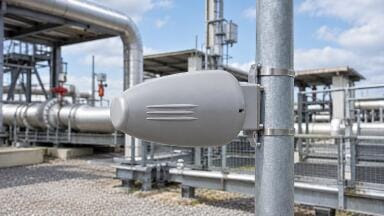
Aeternum’s air quality sensor is positioned under the Kingston Bridge, less than a mile from the Scottish Event Campus (SEC) where COP26 was held. Carrying the M8 motorway through the city centre with five traffic lanes in each direction, the Kingston Bridge is one of the busiest bridges in Europe, with around 150,000 vehicles travelling across it every day.
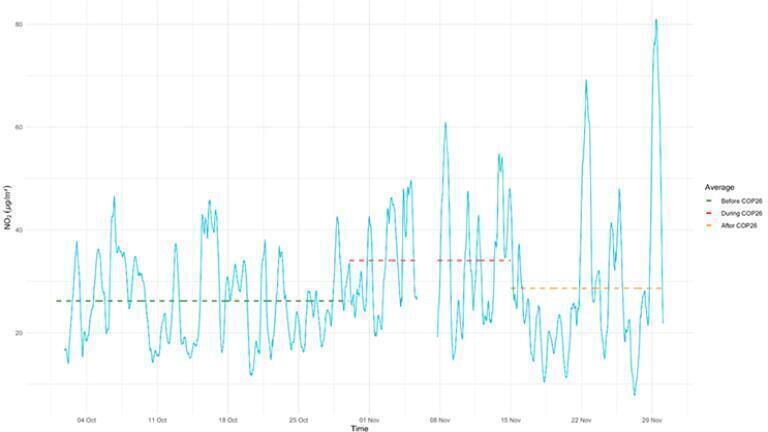
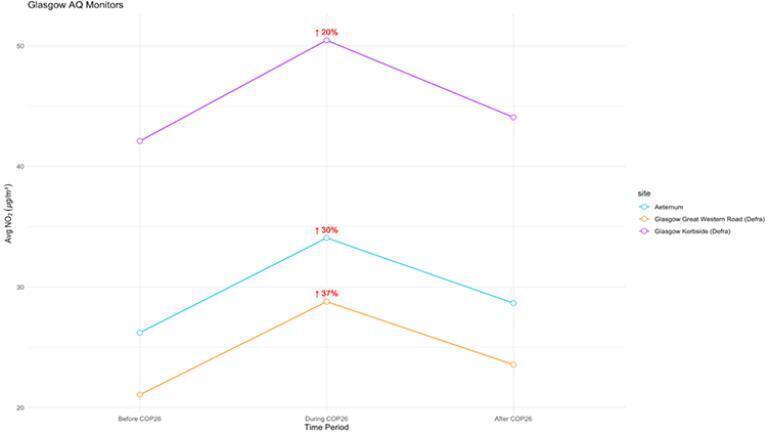
Aeternum’s sensor found the average concentration of NO2 during the two weeks of the conference was 34 µg/m³ – an increase of 30% (8µg/m³) from October’s average of 26µg/m³. The average level of NO2 began to drop in the days following the end of the conference, falling back down to 29µg/m³ by 29th November (see Figure 1).
Aeternum’s data follows a similar trend to two air quality sensors installed by the UK’s Government’s Department for Environment, Food and Rural Affairs (DEFRA) around Glasgow during the same time period, which recorded a peak in nitrogen dioxide during the conference (see Figure 2).
Nitrogen oxides are produced in combustion processes, and road traffic is the principal outdoor source of nitrogen dioxide, suggesting traffic pollution caused the increase in nitrogen dioxide in the air during the two weeks of the conference. Higher levels of nitrogen oxide can contribute to health issues, particularly among young children, asthmatics and adults with heart and respiratory disorders.
Paul Carter, Founder of Aeternum, said: “Our sensor data clearly shows an increase in average nitrogen dioxide levels under Glasgow’s Kingston Bridge during COP26, compared to the month prior to the event. When we compared our findings with those of DEFRA’s monitoring stations, we identified a general trend that average NO2 levels increased during the event and later fell to almost its previous levels.”
He continued: “There has been much speculation about the potential environmental impact of holding such a large global event that saw many delegates arriving and departing via modes of transport that are harmful to the environment. Our sensor is positioned along a main walkway leading to the SEC, enabling us to gather a clear picture of the air many attendees were breathing during the conference. By accurately monitoring hyperlocal air quality, local councils and communities can gather a clear, real-time picture of the impact of pollutants in the air local people are breathing – and make informed decisions about how best to manage them.”
IET Guide 2026

 Product directory