Air monitoring
The Flame Ionisation Detection (FID) method was first developed in the 1950s for the laboratory analysis of organic chemicals. Later, when environmental regulations began to limit the emissions of volatile organic chemicals (VOCs) in the 1970’s and 1980’s, the FID method was adapted for emissions monitoring. Signal Group was one of the first companies in the world to develop VOC emissions analysers, and in the following article the company’s Managing Director, James Clements, will explain why FID became the reference method, and why it lasted the test of time.
Organic chemicals have always been widely used in industrial processes, but awareness of the harmful effects of VOCs on health and the environment did not become significant until the 1970s. At that time, President Richard Nixon presented proposals on environmental protection which included the establishment of a federal Environmental Protection Agency (EPA). This led to the development of maximum allowable concentrations for pollutants, many of which were subsequently adopted around the world
VOCs are common constituents in the emissions of processes that involve petrochemicals, paints, coatings, adhesives, waxes, disinfectants and cleaning chemicals. In many of these processes, solvents play a major role and the release of VOCs represents a risk to health and the environment. Similarly, combustion processes give rise to VOC emissions, particularly where combustion involves the use of an organic fuel. This includes fossil fuels such as petrol, diesel and oil, as well as wastes and biofuels.
By monitoring total organic carbon (TOC) concentration in emissions, process operators can demonstrate compliance with relevant legislation. However, such measurements also provide insights for process optimisation, because, for example, the presence of organic compounds may be an indicator of incomplete combustion. In addition, TOC is frequently measured post-abatement in order to measure abatement efficiency.
It is normal practice for regulators to specify a standard reference method for monitoring pollutants, so that compliance measurements are accurate and directly comparable with the limits, and with measurements from other process operators. FID has been widely acknowledged as the reference method for VOCs for over 50 years, and there are many reasons for this:
Although the latest range of FIDs from Signal Group feature a fourth-generation detector, it is truly remarkable that the core measurement technology has changed very little since the company first developed a FID in the 1970s. The main reason for this is that each generation of Signal’s FID has featured the company’s unique precision-machined monobloc detector which guarantees uniformity of production in a compact, leak-free design.
Most of Signal’s FID development work has therefore focused on issues outside of the core technology. These issues have either been application specific, or have addressed ease of operation, connectivity and data management.
In addition to fixed and portable FIDs, Signal has developed both hot and cold FIDs for ambient or post-combustion applications. Dual FIDs have also been developed, featuring two FIDs in one instrument, so that methane and non-methane hydrocarbons (NMHCs) can be monitored simultaneously. This is an important differentiation because methane’s primary significance is as a greenhouse gas (around 30 times more powerful as a greenhouse gas than carbon dioxide), whereas NMHCs contribute to the photochemical generation of smog and atmospheric ozone.
So, methane emissions are important because of their role in climate change, whereas NMHC emissions affect air quality and health.
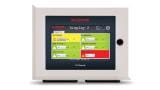
Development work at Signal has also focused on automation, datalogging, sample conditioning and advanced calibration tools. In addition, the most recent generation of instruments features a wireless tablet capable of connecting via Wi-Fi to the analyser from a distance of up to 50 metres. This provides users with the ability to view live data in a different location, and even manage datalogging, alarms and calibration from a distance.
In addition, all Series IV instruments, including the new SOLAR XPLORE, have their own IP address, and are compatible with 3G, 4G, 5G, GPRS, Bluetooth and satellite communications. This provides users with simple and secure access to their analysers at any time, from anywhere.
In summary, Signal’s first FID analysers in the 1970s were able to provide accurate consistent measurements for total hydrocarbons. Now, thousands of instruments later, their successors are still producing the same reliable data, but with built-in tools and accessories that make the monitoring process easier and less prone to human error. Employing the standard reference method, supported by over 50 years of rigorous work in every conceivable application, FID has stood the test of time, offering operators and regulators confidence and trust in VOC measurements.
Signal Group Ltd develops and manufactures gas analysers for the professional testing of VOCs, vehicle and engine emissions, tobacco smoke, impurities in special gases, power plant emissions, catalyst efficiency, and boiler/burner combustion emissions.
Since 1977 the company has been manufacturing state-of-the-art, high-end reference gas analyzers based on flame ionisation detectors (FID), chemiluminescence detectors (CLD), and a variety of non-dispersive infra-red (NDIR) technologies.
Other peripheral equipment manufactured by the company supports the ability to develop bespoke turnkey systems for customers.
Signal’s highly experienced support team helps customers to specify the most appropriate monitoring equipment whilst also delivering maintenance and service contracts to ensure accurate and reliable monitoring. High calibre and well-trained representatives around the world offer the same levels of sales and service backup to customers around the world.
James Clements became Managing Director of Signal Group in 2018 following the retirement of his father John who founded the business in 1977. Signal Group is one of the UK’s leading manufacturers of gas analysers for the professional testing of VOCs, engine emissions, impurities in special gases, power plant emissions, catalyst efficiency, and boiler/burner combustion emissions. James has an Engineering degree from the University of Bath, and 23 years of experience in gas analysis instrumentation research, design and engineering.
IET 36.5 Sept/Oct 2026

 Product directory




.jpg)






















.jpg)