Weather monitoring
Published over 13 years ago. See the latest and most current information on Weather monitoring.
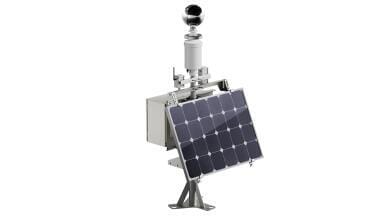
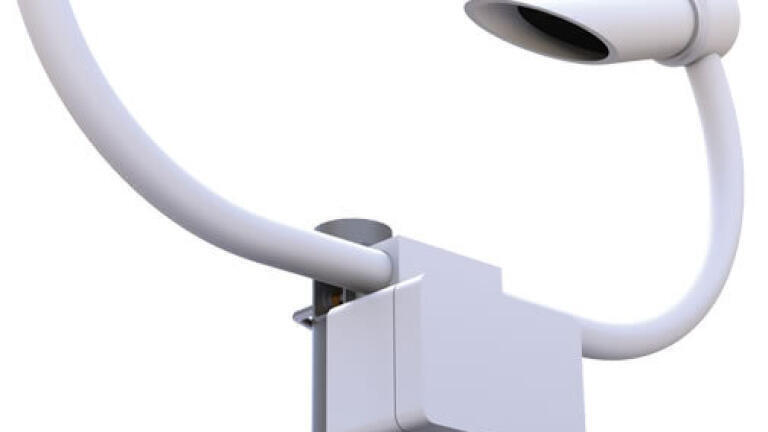
The CS125 Present Weather Sensor from Campbell Scientific (UK) is designed to meet the budgetary requirements for instrumented present weather monitoring for road weather, aviation, marine and wind energy applications. However, with its high end specification, the CS125 offers outstanding value for money.
The sensor uses the well-established forward scatter system for visibility measurement, utilising a 42° scatter angle which gives accurate estimates of Meteorological Observable Range (M.O.R.) for fog and snow with a maximum reported visibility of 32 km. The CS125 can distinguish and report up to 25 separate present weather codes (SYNOP) whereas many other lower cost PWS devices typically offer a handful of present weather codes.
The sensor is designed so that the measurement volume is relatively undisturbed by the mounting and electronics enclosure and also to have a high immunity to the visible and infra-red warning lights often used in the environments the sensor will typically be deployed in.
The sensor will operate reliably within a temperature range of -25°C to +60°C with an option for an extended range if required, with a relative humidity range of 0-100%.
Two user-configurable alarms are provided with RS232/RS485 or logic level outputs.
IET Guide 2026

 Product directory