Water/wastewater
Published over 12 years ago. See the latest and most current information on Water/wastewater.
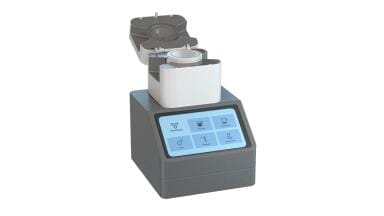
The Seibold Composer, from SeiboldWasser (Austria) is based on reliable colorimetric technology. This colorimetric technology is rated as one of the most reliable technologies for online measurements.
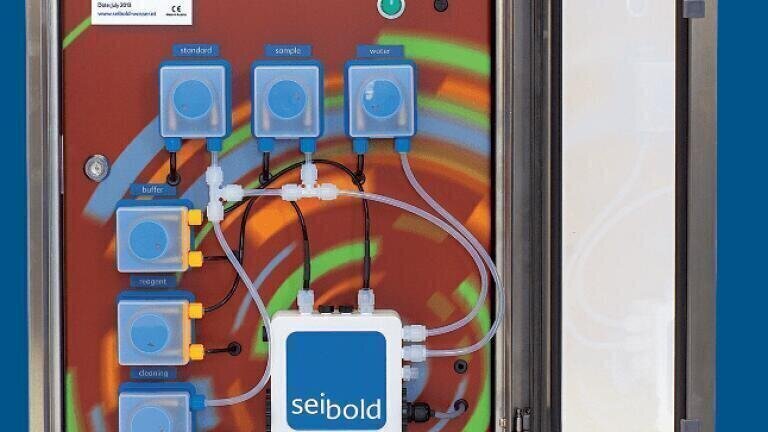
Two strong points of concern brought SeiboldWasser to the conclusion that it needed a new and different online analyser design and setup to what was already being sold on the market. The first and most important point was the operational reliability. While other companies add more and more mechanical complexity, such as valves, piston pumps and small hose connections; SeiboldWasser focuses on reduced complexity, a minimised number of parts and avoidance of any moving parts.
The second point was chemistry and reagents used for building a complex between the reagent and the heavy metal. While others embed laboratory methods with toxic chemistry, SeiboldWasser developed a new set of modern reagents and chemistry, non-toxic and highly sensitive to the measured heavy metal.
The SeiboldWasser Online Analyser design boasts reduced mechanical complexity for better operational reliability and reduced maintenance efforts as well as non toxic and non hazardous reagents for lower operational risk and lower costs of operation.
The non toxic and non hazardous reagents make the SeiboldWasser Composer an ideal analyser for drinking water and beverage plants. SeiboldWasser's ability to customise the reagents composition in complex matrix waste water situations is important to industrial clients and their waste water management. The simple mechanical design results make the SeiboldWasser Composer ideal for unobserved, remote locations.
The list of heavy metals measured includes; Iron, Manganese, Chromate and Chrome, Copper, Cadmium, Lead, Mercury, Nickel and Zinc. The measurement range starts in the low ppb up to high ppm range.
IET 36.5 Sept/Oct 2026

 Product directory




.jpg)










.jpg)