Water/wastewater
For environmental monitoring professionals, the significance is not simply that another water Bill is coming.
It is that the proposed Clean Water Bill points toward a different model of evidence, oversight and accountability across the sector.
The government’s briefing notes describe the Bill as a once-in-a-generation reform intended to move the water sector away from a system in which water companies 'mark their own homework'.
Alongside the legislation, ministers say they are taking forward non-legislative reforms to end Operator Self-Monitoring, the long-criticised regime under which companies have carried out and reported elements of their own wastewater compliance monitoring.
 How increased transparency affects monitoring
That shift matters because it changes the role of monitoring from a largely compliance-driven reporting obligation into a more visible part of public accountability.
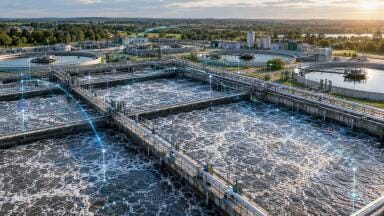
The government’s Water White Paper has already pointed to a move towards 'open monitoring', where companies are no longer responsible for marking their own environmental performance and where wastewater monitoring is expected to become more digitised, automated and publicly accessible in near-real time.
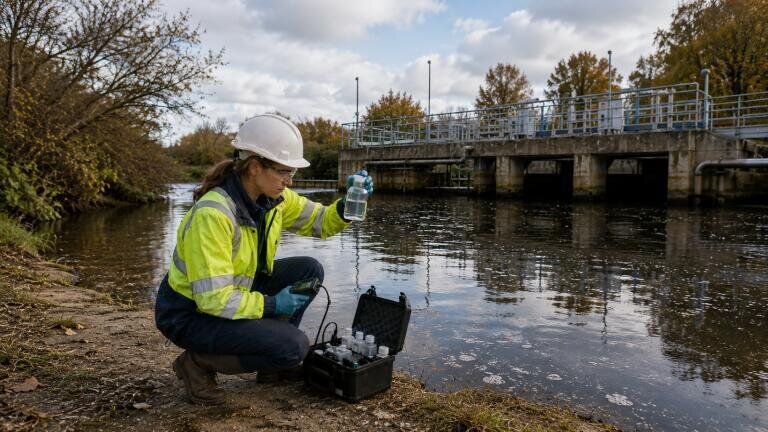
For laboratories, sampling contractors, sensor suppliers and data platform providers, this could create a very different operating environment. More open monitoring will depend on trustworthy sampling, defensible methods, clear audit trails, robust telemetry and data systems that can withstand public, regulatory and legal scrutiny.
It could also increase demand for independent verification, accredited laboratory analysis and better integration between continuous monitoring, spot sampling and incident investigation.
The Bill would also create a new independent integrated water regulator by bringing together relevant functions of Ofwat, the Drinking Water Inspectorate, the Environment Agency and Natural England.
The aim is to end fragmented oversight and give the regulator a more complete view of company performance. For monitoring professionals, that could mean less separation between financial performance, environmental compliance, drinking water quality, asset health and nature-related impacts.
This is important because water monitoring has often been split across different regimes: wastewater permits, storm overflow event duration monitoring, drinking water quality testing, ecological condition assessment, abstraction, leakage, water resources planning and catchment management.
A more integrated regulator may not remove those technical distinctions, but it could increase pressure for data systems that can be compared, combined and interrogated across the full water cycle.
The Bill also links water reform to infrastructure investment. The government says it has unlocked £104 billion of private investment to rebuild water infrastructure, while arguing that stronger oversight is needed to support long-term upgrades.
Monitoring professionals should expect this to place more emphasis on asset condition, network performance, leak detection, overflow operation, treatment works compliance and catchment-level outcomes.

The story, then, is not just stricter enforcement. It is a shift in the evidence architecture of the water sector. If companies are no longer trusted to monitor themselves, the question becomes who collects the data, who verifies it, who owns it, who publishes it and who is liable when it is wrong.
For the monitoring industry, that creates opportunity but also pressure. Instruments will need to be reliable in difficult field conditions. Laboratories will need capacity and defensible quality systems.
Data providers will need to handle near-real-time publication without sacrificing accuracy. Regulators will need the skills and resources to interpret a much larger evidence base.
The Clean Water Bill may be sold politically as a river-cleaning measure. For monitoring professionals, it is better understood as a possible redesign of how water evidence is produced, trusted and acted upon.
IET 36.5 Sept/Oct 2026


 Product directory



.jpg)








.jpg)