Water/wastewater
Published over 17 years ago. See the latest and most current information on Water/wastewater.
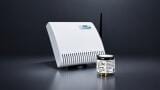
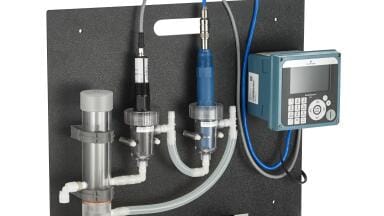
Burkert’s (Germany) new 8201 pH system and 8285 transmitter have been chosen by Müller’s for the largest dairy in Europe, after 10-months of testing against a major competitor’s unit. At the conclusion of the tests only the 8201 pH system was shown to have met the demands of the continuous process; the enamelled stainless steel finish of its sensor still looking and measuring like it was new.
Whereas the competitive pH system needed to be cleaned and calibrated weekly - and also needed to be replaced during the 10- month testing period, Burkert’s 8201 pH system was only calibrated at the beginning of the tests and stayed in- process thereafter After 8 weeks, the customer checked the values of the electrode on the Burkert unit, but it did not require any adjustment. Even more surprising for Müller was the final measurement against the company’s reference laboratory pH standard using pH 1.08 hydrochloric acid; here again the 8201 proved itself superior. As a result of the extended trials, Burkert’s new 8201 pH system is now being specified in Müller’s whey treatment process, where the whey undergoes ultra- and nano-filtration and reverse osmosis to get all the goodness out. The concentrate is dried and used in the production of yoghurt and many other food products. The pH measurement is necessary during the cleaning process of the filters; and in order to get an effective and short cleaning time the pH value on the one side has to be as low as possible; on the other side it must not fall below a minimum limit to avoid damaging the filter units. During nano-filtration the pH value has to be controlled precisely and must remain at pH=6.2. This value is regulated by adding acidic carbon dioxide to the whey. Key to the superior performance of the Burkert 8201 pH system is a ‘fit-and-forget’ design that enables the measuring sensor to stay in process, even during CIP purification. This feature saves users both time and cost, by removing the requirement for sensor removal, cleaning and recalibration.IET 36.5 Sept/Oct 2026




 Product directory




















.jpg)