Water/wastewater
Published over 13 years ago. See the latest and most current information on Water/wastewater.
A new material could be the future of pollutant clean-up and water treatment. White graphene was originally intended for use in the electronic industry to create better solar cells, high density batteries and ultracapacitors for faster computers. It has now been discovered that it is ideal for use in cleaning up pollutants.
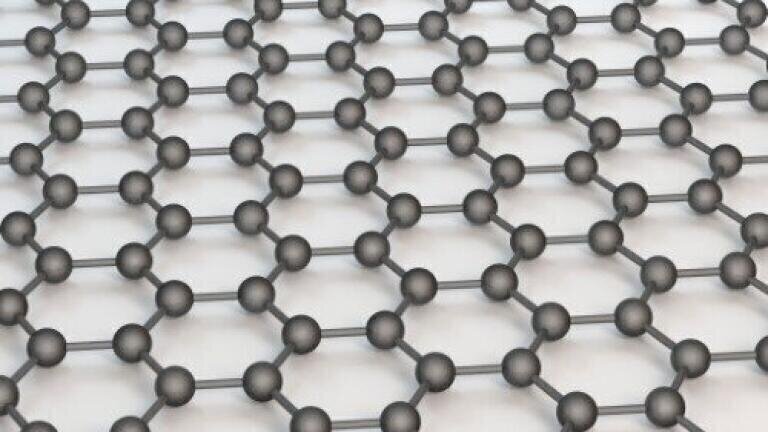
Graphene is the most conductive and strongest material ever made. It is the same thickness as a single carbon atom and has a natural structure of regular hexagons - making its composition appear similar to a chain link fence. It is so strong that - researchers say - to break through a single layer of graphene, it would require an elephant balanced on a pencil.
White graphene - the most recent variation on this material - can absorb up to 33 times its own weight in chemical ethylene glycol and around 29 times its weight of engine oil. Even though the powder becomes heavier through the absorption of pollutants, it continues to float on top of water - meaning that it is easy to collect. It can then be cleaned to release the pollutants by heating in a commercial furnace or by igniting it. Other pollutant absorbing materials can only be cleaned like this a few times before becoming unusable.
These results mean that it could become a key product in terms of water treatment and the cleaning of chemical spills. Unfortunately the product is currently too expensive to produce and cannot be made in large quantities for it to be a viable investment for industry.
Francesco Stellacci, a professor at Ecole Polytechnique Federale de Lausanne in Switzerland, said: "I think that at the end it will not be performance that will determine the final material used, but more costs and scalability. I really hope that one of these materials, and maybe this one, will make it."
IET 36.3 May

 Product directory