Water testing
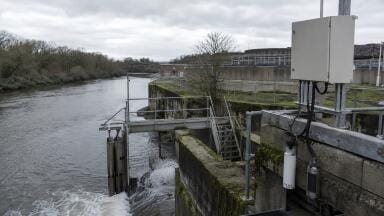
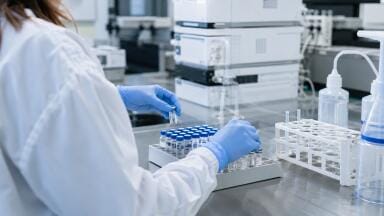
Checking algae in water usually means taking samples, sending them off to a lab, and waiting for the results. That still has its place, but it doesn’t always work well when conditions can change quickly — particularly in lakes, reservoirs, rivers, or coastal waters.
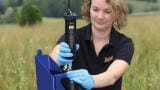
The AlgaeTorch from bbe Moldaenke (who will be exhibiting at IFAT Hall C1, Stand 130) is designed to bridge that gap a bit. It’s a portable handheld device that lets you measure chlorophyll-a and cyanobacteria (blue-green algae) directly in the field, with results in under 20 seconds and no sample preparation.
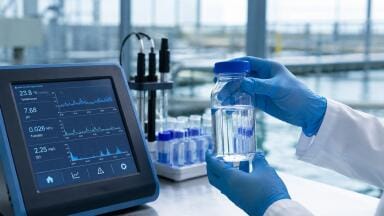
In practice, it’s easy. Switch it on, dip it into the water, and take the reading. It uses fluorescence to estimate algal levels from intact cells, so there’s no need to filter or process anything beforehand. That makes it useful for quick checks across multiple locations in a short space of time.
One of the more useful features is automatic turbidity correction, which helps improve reliability when water is murky or contains suspended material. It also has built-in GPS, so each measurement is tied to an exact location — which is helpful when you’re building up a picture of how conditions vary across a site.
The system is used in a wide range of applications: rivers, lakes, seawater monitoring, reservoir management, and also in research and education. It’s particularly relevant for detecting cyanobacteria blooms, which can develop quickly when conditions are right.
On the software side, it’s fairly straightforward. Readings can be viewed on the device, then downloaded to a computer later. From there, data can be reviewed, plotted over time, and exported into standard formats such as Excel. It can also be mapped in tools like Google Earth, which helps when visualising spatial trends.
Overall, it reflects a broader shift in water monitoring: less waiting for lab results, and more immediate feedback on what’s happening in the field.
IET Guide 2026

 Product directory