Water quality monitoring
Published over 15 years ago. See the latest and most current information on Water quality monitoring.
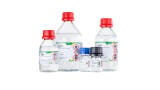
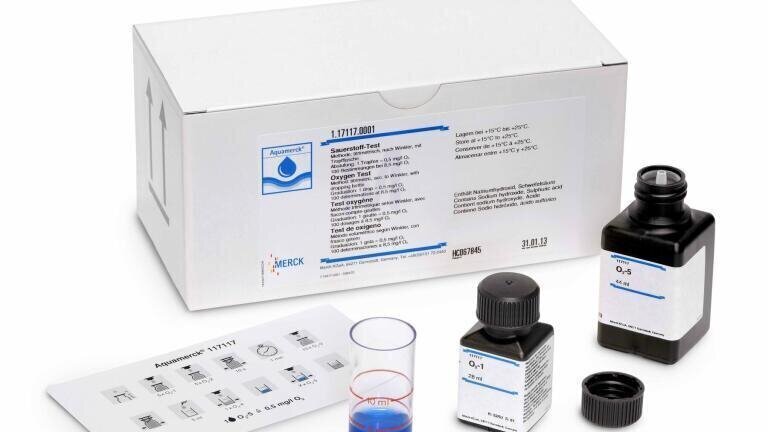
Merck (Germany) offers a complete portfolio of visual rapid tests to analyse oxygen and total water hardness in swimming pools, hotel or domestic water systems or steam generation systems in the industrial sector. It is available in different graduations and sensitivities and is thus a solution for a wide range of customers’ demands – easy to use, reliable, and cost-effective.
There are three different Aquamerck® rapid tests by Merck available to determine the oxygen content in water. The blister package with its color card allows especially quick, semi-quantitative and cost-effective analysis. The titrimetric method with dropping bottle is more sensitive and also extremely easy to operate. In comparison, the titrimetric Aquamerck® test with titration pipette delivers the most accurate results for oxygen analysis.
The total water hardness is influenced by its alkaline earth content, mainly calcium and magnesium ions. In order to determine these ions, various Aquamerck® rapid tests can be used – starting with the blister package with favorable analysis costs up to more sophisticated and sensitive version with the titration pipettes. In addition, all Aquamerck® total water hardness tests by Merck will convince you with a special feature: None of them contain barbiturate!
IET 36.5 Sept/Oct 2026


 Product directory




.jpg)









.jpg)