Stack monitoring
Published over 11 years ago. See the latest and most current information on Stack monitoring.
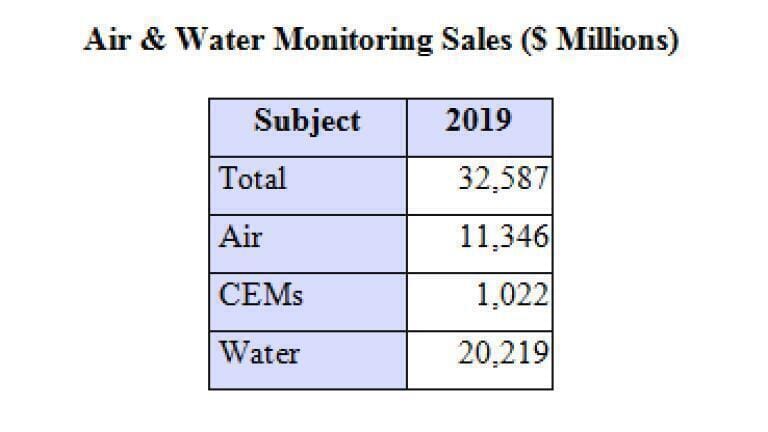
Sales of instrumentation, software and services to monitor and measure air and water parameters will exceed $32 billion in 2019, representing a growth of over $5 billion from present levels. This is the latest forecast in Air and Water Monitoring: World Market published by McIlvaine Company (USA).
The air segment includes stack continuous emissions monitors (CEMS) as well as instruments to measure physical and chemical aspects of process and combustion air. This segment is growing at a high rate due to the huge Chinese initiative to convert coal to synthetic natural gas, chemicals and fuels such as gasoline. The main route to these end products is gasification of coal. The control of oxygen is critical to the process. The removal of contaminants from the gasified coal needs to be measured. Pressure and temperature monitoring requires substantial numbers of sensors and control systems.
The monitoring of water and other liquids such as fuels requires twice as much of an investment as does the air monitoring. One of the more challenging new applications is subsea gas and oil extraction. Monitoring the boiler feedwater for coal-fired power, nuclear and combined cycle gas turbine plants is a major application requiring very precise measurement. Oxygen needs to be measured in parts per billion. Silica, iron and other contaminants also need to be measured at low levels
The new ultra-supercritcal coal-fired boilers require higher temperature and pressure measurements than previous generator designs. There are increasing numbers of contaminants which must be measured in the stack gas discharge. The U.S. has passed regulations requiring mercury measurements as low as 4 micrograms per cubic meter.
The semiconductor and pharmaceutical industries are measuring much smaller quantities of air, gas and water. However, the need for precision makes the average instrument relatively expensive, making these two industries significant purchasers.
IET Guide 2026

 Product directory


















-corr.jpg)