Sewage monitoring
Published over 14 years ago. See the latest and most current information on Sewage monitoring.
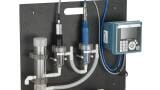
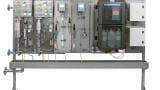
HACH LANGE (UK) has launched an innovative new wastewater sampling system, which will open up a new world of opportunity by enabling water companies to continuously monitor sewage at the plant inlet.
In the past, it has been almost impossible to monitor influent because of the physical and biological challenges that sewage presents – ragging, biofouling etc. However, following trials at a number of UK wastewater treatment plants, engineers at HACH LANGE have developed a new sample preparation system that works extremely well in these difficult conditions.
The new sampling system employs an innovative design that overcomes the problems of continuous sampling from primary sewage. This includes a number of novel design features including bespoke filter cartridges, which are cleaned by backflushing and air scouring.
The ability to monitor influent has been a major objective for many years; previous attempts have involved capital work to divert flow through a semi-protected channel. However, this can involve tens of thousands of pounds so HACH LANGE believes that the development of an effective sampling system is great news for the industry.
One of the influent parameters of most interest is phosphate. This is because there are tight discharge consents to prevent the build-up of nutrient levels in rivers, streams and groundwater. It is common practise therefore to remove phosphate by chemical precipitation with ferric sulphate to form ferric phosphate which can be removed as sludge. Traditionally, this has been achieved by dosing the ferric solution at a constant or flow proportional rate. However, phosphate levels in the influent can vary considerably, particularly when there is a significant contribution from trade discharges, so dose rates are generally set to accommodate the higher levels of influent phosphate to minimise compliance risk.
Now that it is possible to obtain a continuous representative sample of the influent, live phosphate data can be derived from a Phosphax sc orthophosphate analyser, which, in conjunction with a phosphate removal real-time control module (P-RTC) utilises influent monitoring data to determine the phosphate load and thereby to calculate the dose rate to achieve the required removal percentage. It is also possible to monitor phosphate after dosing in order to establish feedback control in a closed loop system.
The P-RTC ensures that chemical dosing is as efficient as possible, and that the plant is able to respond quickly to influent phosphate spikes whilst maintaining consent compliance for both phosphorus and iron. Experience has also shown that influent-P data has provided much greater insight into trade discharges.
Explaining the importance of this new sampling technology, Andy Thornton, an optimisation specialist at HACH LANGE says, “The most exciting aspect of this development is the fact that the sampler enables the implementation of real-time control, which is improving compliance, reducing waste and bringing substantial cost savings to many treatment plants across Europe and beyond.”
IET Guide 2026

 Product directory