Industrial emissions
Published over 4 years ago. See the latest and most current information on Industrial emissions.
Unless you’ve been living under a rock for the last 20 years, the term “global warming” will not have escaped your attention. Scientific analysis shows us that the ambient temperature of the planet is on the rise and if it continues in that vein, there could be catastrophic repercussions for lower-lying island nations and coastal populations in particular.
For that reason, the countries of the world came together in Paris in 2015 to pledge to limit global warming to a maximum of 1.5°C compared to pre-Industrial temperatures. Since anthropogenic activity is a key driver of global warming, monitoring and limiting the emissions we produce across all aspects of our life and work is crucial to achieving that goal and avoiding the most extreme consequences of this phenomenon.
The figure of 1.5°C was settled upon by climate scientists, who predicted that any greater increase in global temperatures would deliver devastating outcomes. Indeed, more prolonged periods of heat and drought, alongside more frequent and more intense extreme weather events, are already jeopardising food security and crop cultivation in some of the world’s tropical regions and the situation is only likely to deteriorate if warming intensifies. However, that’s just the tip of the iceberg (excuse the pun) when it comes to what could happen.
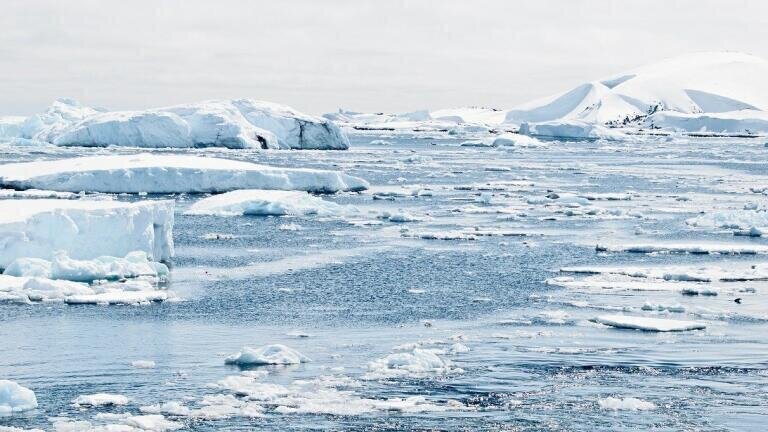
The melting of the polar icecaps is one of the headline predictions made by climate specialists, given that it could have irreversible and exponential consequences. Should the icecaps thaw, sea levels around the world will rise, potentially engulfing seaside towns and even swallowing entire island nations. What’s more, the loss of those icecaps will mean that the North and South Poles never recover their glacial sheets, having a huge impact on local and international ecosystems.
When it comes to greenhouse gases, carbon dioxide (CO2) is undoubtedly the headline act. Accounting for over three-quarters of all emissions, carbon has become a byword for emissions themselves and many scientific bodies actually measure other gases in terms of “CO2-equivalent”. Nonetheless, they are not the only party which contributes to global warming. For example, methane is another significant greenhouse gas, comprising some 16% of all greenhouse gas emissions.
Meanwhile, nitrous oxides (NOx) – and nitrogen dioxide in particular (NO2) – are responsible for some 6% of greenhouse gases. The remaining few percent are made up of a collection of different substances known collectively as F-gases. It is only through measuring emissions of all of these gases that scientists, business owners and policymakers can keep tabs on which industries and companies are emitting more than their fair share and take concrete steps to rein them in and curb global warming.
For more information on how emissions monitoring relates specifically to global warming and climate change, next's year CEM conference is set to take place online in March 2022. Those keen to learn more are advised to virtually attend, since all aspects of the subject are likely to be explored in detail.
IET 36.5 Sept/Oct 2026



 Product directory


















.jpg)







.jpg)