Groundwater monitoring
Published over 5 years ago. See the latest and most current information on Groundwater monitoring.
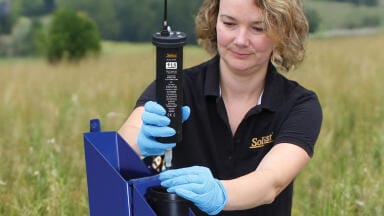
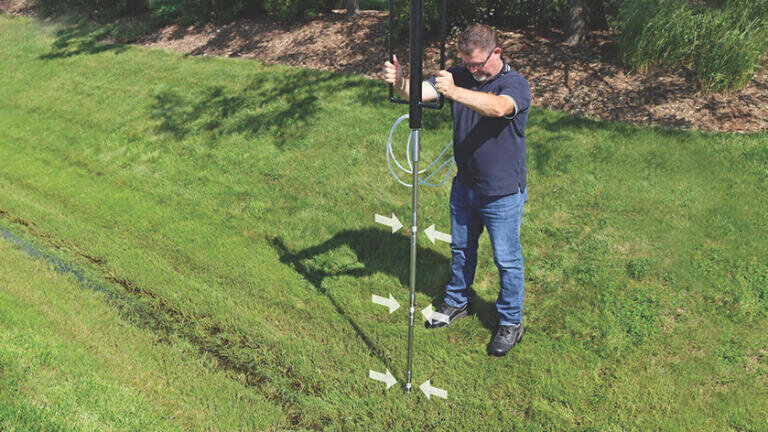
Drive-point piezometers from Solinst offer a low cost, minimal disturbance method for initial site investigations. Their 615ML is a user-friendly, inexpensive and effective solution to creating several monitoring points in a single, shallow installation.
The instrument works when water from the monitoring zone enters the port, passes the stem, and flows up the attached tubing to the static level. Groundwater samples and hydraulic-head readings can be taken within the tubing by utilising small diameter equipment. Solinst’s 615ML Multilevel System also offers a perfect solution for high-precision vertical profiling of soil gas.
The 615 ML Drive-Point Ports feature a stainless steel, 100 mesh cylindrical filter-screen and a ¾” 20 mm (3/4 “) stainless steel drive-point port body. The ports include a dual barbed stem enabling the connection of either 9.5 mm (3/8”) OD or 6.35 mm (1/4") OD tubing to allow up to 3 or 6 monitoring zones, respectively.
Solinst’s 615 ML utilises the same couplings and extensions as their regular 615 Piezometers, only with a Drive-Point Tip to thread onto the first extension, or port. The Drive-Point Ports then attach to a low-cost 20 mm NPT steel drive pipe, which are also similar to standard Solinst 615 installations.
IET Guide 2026

 Product directory