Groundwater monitoring
Published over 13 years ago. See the latest and most current information on Groundwater monitoring.
Millions of people throughout South Asia are thought to have been exposed to arsenic via groundwater, according to a new study. Researchers from Stanford University have suggested that naturally occurring arsenic could have affected around 100 million individuals throughout southern regions in Asia.
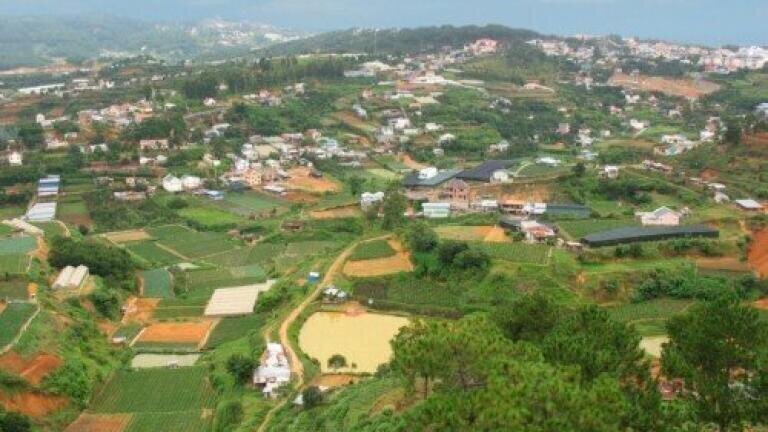
Many countries, such as Vietnam, search for clean groundwater using a 'dig deep' strategy, which can yield wells of uncontaminated groundwater. However, the researchers have found that the heavy pumping from deeper wells can cause compacting of clay layers in the ground, which forces naturally occurring arsenic further into the ground and into deeper aquifers. This means that the dig deep method may not be as successful at locating clean water as residents believe.
Measurements from 42,000 wells throughout the Mekong Delta in Vietnam were reviewed by the researchers, the wells were all part of a multi-aquifer system in the south of the country. It was revealed that arsenic was present in 900 of the deep wells that spanned an area that measured over 386 square miles.
It is believed that the cause of this contamination is caused by clay layers compacting as a result of heavy pumping of an aquifer. This can lead to water being expelled from the clay, which can contain naturally occurring substances, like arsenic, and ultimately contaminate the areas' groundwater. It is known that land subsidence caused by heavy pumping of groundwater is common throughout the south of vietnam, leading to the conclusion that this theory could be a very real possibility.
Steven Gorelick, co-author of the study, which is published in 'Proceedings of the National Academy of Sciences, and lead investigator, said: "This is the first time that satellite measurements have been used to support the occurrence of deep groundwater contamination. The approach can serve as a reconnaissance tool in environments prone to arsenic contamination but where well measurements may be sparse, such as economically underdeveloped regions."
IET 36.5 Sept/Oct 2026




 Product directory