Environmental laboratory
Published over 12 years ago. See the latest and most current information on Environmental laboratory.
Although pesticides have proven to be invaluable in crop production, the same toxicity, stability and mobility that enables them to effectively kill insects causes detrimental effects in humans. The importance of pesticide residue analysis led to the development of the Quick, Easy, Cheap, Effective, Rugged, Safe (QuEChERS) sample preparation approach by Anastassiades and Lehotay, a dispersive SPE method utilising bulk SPE material for sample cleanup. Agencies in both the U.S.A. and Europe have subsequently established methods.
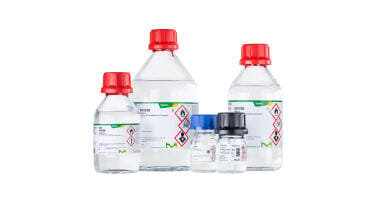
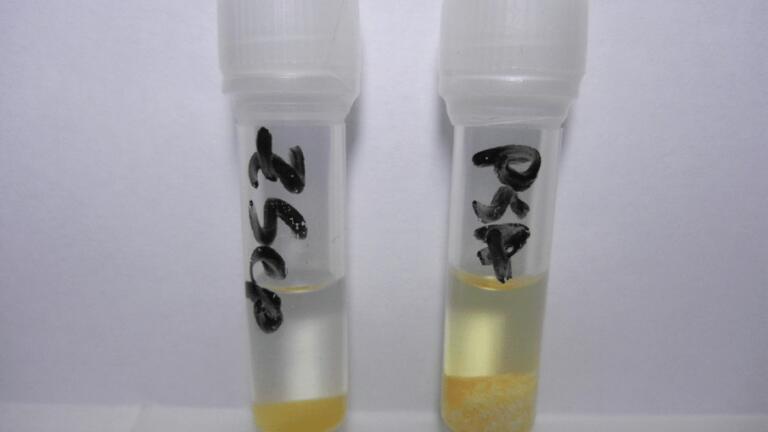
Several materials from Supelco (USA) are available as QuEChERS cleanup sorbents, each effective for the removal of specific interference types. They can be used individually or in combinations best suited to the sample matrix. Z-Sep (the Supelco product name for zirconia on silica) is a new sorbent that enhances sample cleanup for complex matrices.
Two versions are offered: Z-Sep/C18, a blend of two separate sorbents (zirconia on silica and C18 on silica), is recommended as a cleanup sorbent to remove pigments from extracts of samples containing less than 15% fat, or Z-Sep+, a hybrid material (zirconia and C18 are on the same silica particles), which is recommended as a cleanup sorbent to remove fats from extracts of samples containing greater than 15% fat.
IET 36.5 Sept/Oct 2026





 Product directory