Environmental laboratory
Published over 10 years ago. See the latest and most current information on Environmental laboratory.
A new application brief explains how the use of inductively coupled plasma optical emission spectrometry (ICP-OES) with radial plasma observation provides a simple, fast, accurate and precise method for the analysis of trace elements, wear metals, additives, chlorine, and sulphur in oil matrices. Titled, "Analysis of Oils Using ICP-OES with Radial Plasma Observation," the brief is available to download from SPECTRO Analytical Instruments' website, a leading manufacturer of advanced instruments.
The elemental analysis of oils is important for many petroleum laboratories and refining processes. Samples can be crude oils, new and used lubricating oils, gas or fuel oils, and the elements to be analysed vary with the product.
In crude oils, sulphur, alkali elements, vanadium, copper, nickel, iron, arsenic and phosphorus are of importance to characterise the oil and to avoid deactivation of catalysts in the refining process. For wear metals in lubricating oils, aluminum, copper, nickel or iron can be indicative of wear in oil-wetted components. Other elements like silicon, magnesium or potassium can be indicative of contamination of the oil. Also, the correct addition of elements, such as molybdenum, calcium, barium, phosphorus, and zinc should be monitored.
ICP-OES instruments, due to their multi element capability, high dynamic linear range, stability, and low detection limits, are suggested in several standard procedures for oil and fuel analysis.
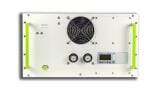
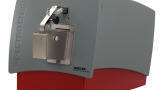
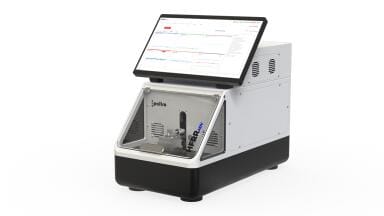
The paper details how ICP-OES, using the new SPECTRO ARCOS ICP-OES instrument with radial plasma observation, can provide a fast, simultaneous determination of trace elements, wear metals, additives, chlorine, and sulphur in oil. The easy sample preparation and low detection limits, combined with the high sample throughput of the method ensures low costs of analysis and enables its use for various applications in the petrochemical field.
IET 36.5 Sept/Oct 2026




 Product directory