Environmental laboratory
Published over 12 years ago. See the latest and most current information on Environmental laboratory.
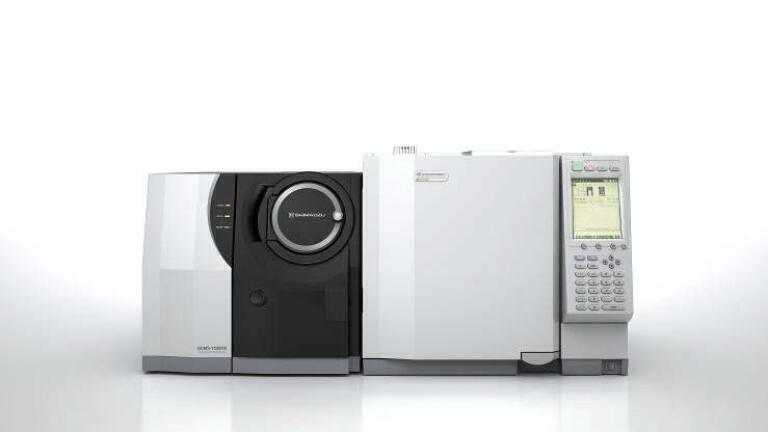
The most accurate, cost-effective triple quadrupole GCMS ever/Simultaneous multicomponent analysis and ultra-high-sensitivity analysis/GCMS-TQ8040 targets food safety and environmental fields.
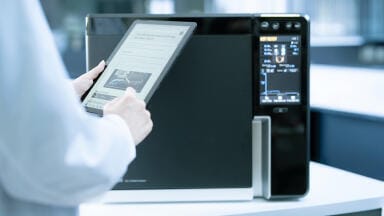
Shimadzu (Germany), one of the world leaders in analytical instrumentation, introduces the new GCMS-TQ8040. It inherits the performance of the GCMS-TQ8030 triple quadrupole, which provides ppt (1 trillionth) level sensitivity and ultra-high-speed analysis. At the same time, the GCMS-TQ8040 offers significantly improved throughput and operability. This product features excellent productivity via simultaneous analysis, smart operability, high sensitivity and high speed.
In addition, it can be used as a "GCMS Smart System" when combined with Smart Database series libraries. As phase one of the Smart Database series, the Smart Pesticides Database is available concurrently. This database supports the analysis of residual pesticides in foods with data on approximately 480 pesticide components used worldwide, thereby contributing to food safety. Additional databases will be developed for environmental, pharmaceutical and life sciences applications.
mproving accuracy and throughput, the new GCMS-TQ8040 combines Ultra-Fast Mass Spectrometry (UFMS) and Multiple Reaction Monitoring (MRM) based on Shimadzu's patented UF sweeper TM technology. The system is the most accurate, cost effective, easy-to use triple quadrupole GCMS ever. Through smart technologies, it provides a new level in routine work; Smart Productivity means high efficiency and sample; throughput and is based on simultaneous multi-component analysis; Smart Operation facilitates rapid and easy method development; Smart Performance enables Scan/MRM for low detection limits and simultaneous target compound confirmation.
Triple quadrupole GC-MS/MS systems are utilised for a wide range of applications, including the analysis of residual pesticides in foods and detection of environmental pollutants in tap water and environmental water. In recent years, the number of components to detect has increased, while their quantities have become miniscule. Accordingly, in addition to instrument performance, the need has grown for improved operability, simultaneous multicomponent analysis and support for the development of optimal methods. Analysis three times faster In response to these needs, Shimadzu has developed the GCMS-TQ8040. Equipped with new firmware protocols and a method creation program, the system achieves excellent productivity and higher level operability without sacrificing high sensitivity, high selectivity and high speed. Since sensitivity is not lost, even during simultaneous multicomponent analysis, the GCMS-TQ8040 can simultaneously analyse over 400 components, more than twice the capability of existing models. As a result, analyses that had to be divided across multiple cycles can now be performed in a single cycle. Depending on the conditions, the analysis time can be shortened from 120 minutes to 40 minutes, 1/3 the conventional time.
When used in combination with the Smart Database, a user can create optimal methods automatically and start analysis without the need for complicated procedures.
IET 36.5 Sept/Oct 2026




 Product directory