Environmental laboratory
Published over 14 years ago. See the latest and most current information on Environmental laboratory.
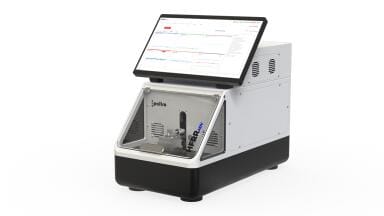
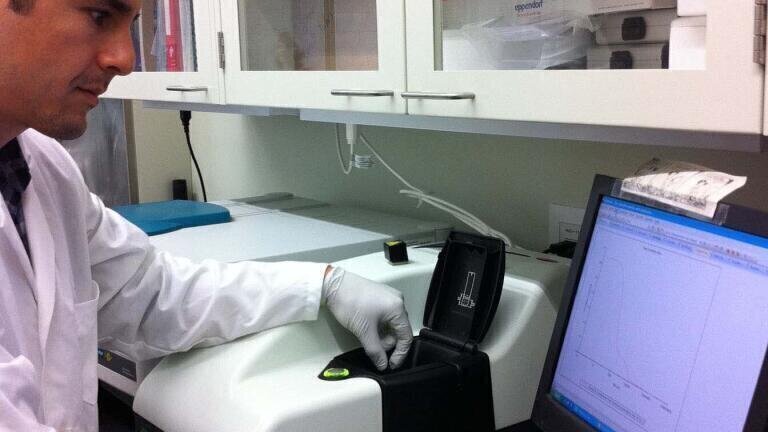
Researchers at the University of Alberta, Canada, working as part of a major Canadian initiative to investigate the aquatic and environmental aspects of nanoparticles, are using the Zetasizer Nano from Malvern Instruments (UK) to characterise nanoparticle behaviour in biological and aqueous matrices. Size is known to affect nanoparticle toxicity and toxicology and the technique of dynamic light scattering (DLS) provides the average size behavior in solution. As implemented in the Zetasizer Nano, it delivers information for physical characterisation in terms of charge and solubility.
Professor Greg Goss is Director of the Office of Environmental Nano Safety (OENS) in the Department of Biological Sciences at the University of Alberta. “Dynamic light scattering is now recognised as a basic characterisation technique in this area of work and the regulators are familiar with the measurement, its results and limitations. In the past we’ve used TEM but this works better in conjunction with DLS since we can now study size in solution in a way that is simple to use and with only minimal need for sample preparation,” he said. “DLS is the only technique on campus that can provide size information in solution, without drying the samples.”
Professor Goss and his team have previously used earlier models of DLS instruments but find that, compared with other systems, the Zetasizer Nano delivers information that is not only much easier to understand and is more consistent, but enables significantly more data interpretation: “We can now study interactions of proteins in ways that previously were not feasible,” he confirmed.
The Zetasizer Nano is used by this research group to study the interactions of particles such as silver, titanium, silica and polymer coated quantum dots. Elsewhere in the department it also plays a role in the analysis of other systems, micelles and polymers for example.
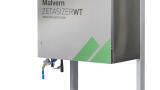
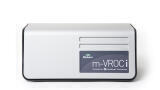
Malvern’s Zetasizer range combines particle size, zeta potential and molecular weight analysis for particles and molecules from below a nanometer in size to several microns. The system measures size using dynamic light scattering, zeta potential and electrophoretic mobility using electrophoretic light scattering, and molecular weight using static light scattering.
For more information about the research interests of Professor Goss and his team please visit http://j.mp/QAPreD
For details of Malvern’s Zetasizer family go to www.malvern.com/zetasizer
IET 36.5 Sept/Oct 2026





 Product directory