Environmental laboratory
Published over 5 years ago. See the latest and most current information on Environmental laboratory.
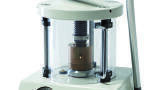
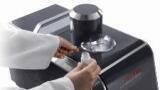
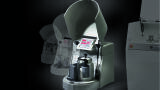
FRITSCH’s highly versatile Pulverisette 19 universal cutting mills can reduce dry materials, whether tough, brittle, hard, soft, fibrous or temperature-sensitive to a fine powder with unsurpassed ease and efficiency. The Pulverisette 19’s variable speed can be adjusted from 300 to 3,000 rpm, enabling rapid and reliable comminution. The slow-speed universal cutting mill has a variable speed of 50 – 700 rpm finely grinds even the smallest of samples.
What are the main advantages of owning a universal cutting mill?
FRITSCH’s universal cutting mills can have the rotor speed adjusted by the operator to suit the sample being comminuted, so it can offer a powerful and fine level of grinding.
The universal cutting mills are simple, quick and efficient to clean – free of residues.
Stainless steel models are available for analytical labs, as well as the food and pharma sectors.
There are a variety of rotors and knife geometries, changeable blades, efficient and user-friendly sieve cassettes and other innovations to make the operator’s experience easier.
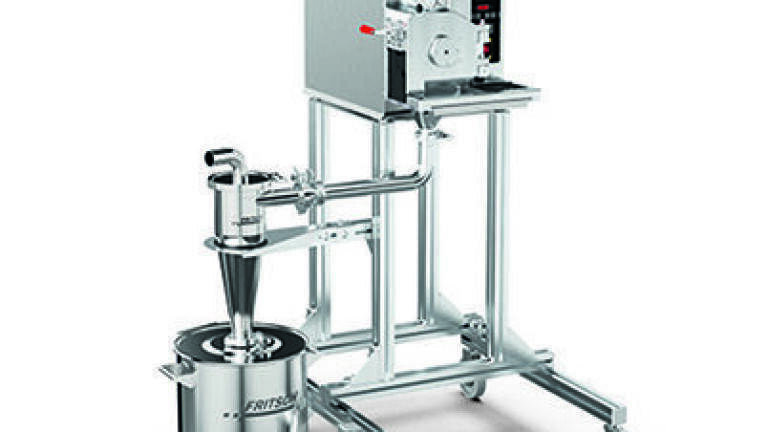
To further enhance performance, operators can combine the universal cutting mill with Fritsch’s Cyclone separator as a sample exhaust. This simplifies sample feeding, increases throughput, reduces thermal load and enables a final comminution with finer particles, even from the toughest material.
A cutting mill designed for simple maintenance
Available only from FRITSCH: For residue-free cleaning all grinding parts of our Cutting Mills can be removed within seconds without tools – unbeatable fast, simple and efficient.
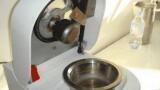
All components of Fritsch cutting mills’ grinding mechanisms can be removed without the need for tools quickly and easily. This offers a wide open and empty grinding chamber with minimal dead space and smooth interior walls, which is simple and rapid to clean and ensure against cross-contamination of samples.
IET Guide 2026

 Product directory