Environmental laboratory
Published over 9 years ago. See the latest and most current information on Environmental laboratory.
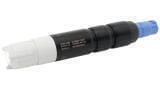
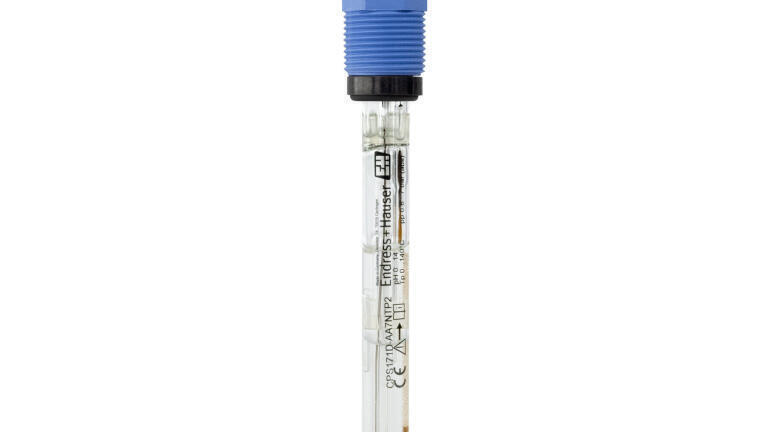
Endress+Hauser introduces Memosens CPS171D pH electrodes that can be sterilised and are autoclavable for use in bioreactors, fermenters, and other hygienic and sterile applications in the biotechnology, pharmaceutical, food/bev and similar industries. The CPS171D measures 0-14 pH and works in temperatures from 32-284°F (0-140°C).
The CPS171D is IECEx and ATEX approved for use in hazardous locations; has IP68 protection and a TÜV certificate; and has FDA, USP and ISO approvals for biocompatibility regarding cytotoxicity and bioreactivity. It is suitable for CIP and SIP operations up to 284°F.
High yields and high quality product is achieved in fermentation applications with accurate and reliable pH measurement over a narrow range. The CPS171D pH probe has been developed with a unique reference gel and glass membrane. When combined these new features improve the long-term stability for reliable and accurate measurement, even after multiple clean-in place (CIP) and sterilise-in-place (SIP) cycles. The sensor performs well after autoclaving at 284 °F (140 °C). These sensor characteristics, pressurised reference and ion trap make the CPS171D uniquely designed for biotechnology applications.
The Memosens CPS171D provides maximum process safety and data security because of noncontact, inductive digital signal transmission to its cable for communication to the Liquiline transmitter. The inductive connection eliminates problems with measured values being distorted from moisture, and terminals becoming coated or corroded in service.
Memosens technology allows the sensor to store measuring and operating data in the sensor including serial number, calibration date, number of calibrations, offsets, pH application range, number of calibrations, hours of operation under extreme conditions and other information. Recording sensor data in the sensor itself enables predictive maintenance and makes it easy for asset management software, such as Memobase Plus, to facilitate life-cycle management.
Memosens technology also simplifies replacement in the field, because the sensor can simply be replaced with another calibrated sensor, which will automatically transfer its data to the transmitter. Once the sensor has been connected, its calibration is used for the measured value. Calibration data is stored in the sensor, so the sensor can be calibrated and adjusted independently of the measuring point.
IET 36.5 Sept/Oct 2026




 Product directory