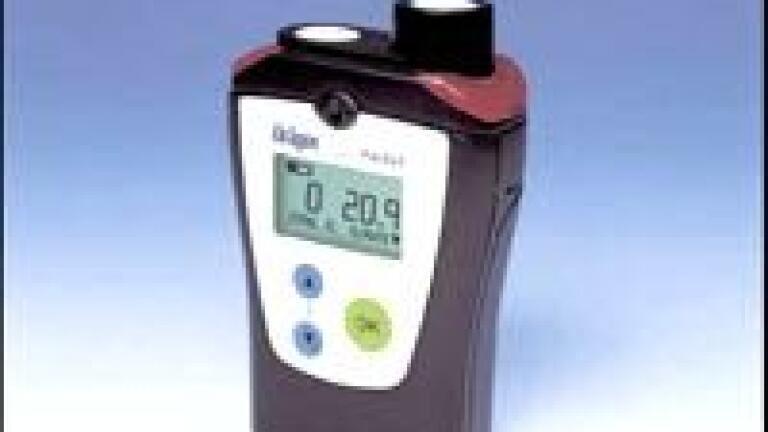
Explosive hazards and a lack or surplus of oxygen can easily be kept under control with the new Pac Ex2 from Draeger (Germany). Featuring state-of-the-art technology and combining extended operational time with minimal training and charging time requirements, this robust,
handheld monitor also incorporates Draeger’s longer-life sensors to further increase the cost savings benefits.
Developed for use in oil and gas refineries as well as inmining, chemical, shipping, utilities and waste disposal applications, this portable two-in-one instrument can also be used for the certification of safe work areas. In addition, it is ideal for monitoring workplaces where low concentrations of gas are constantly present, and in confined space or difficult to reach areas.
Firefighters and civil defence organisations will also find it useful in the evaluation of combustible hazards during emergency situations. For maximum flexibility, the PacEx2 can be supplied in two versions: as an instrument for explosive gas measurement, or as a “plug and playâ€, combination instrument for explosive gas and oxygen measurement. Designed to monitor hazard concentrations continuously, simultaneously and independently, it has a short response time and emits vibrating, audible and visual alarms as soon as the alarm thresholds are reached.
Utilising three functional pushbutton controls, the PacEx2 offers two menus: a quick menu and a password protected version.
The quick menu provides access to the fresh-air calibration and a read-out of the four-hour Ex-average concentration. Once entered, the four-digit password will allow configuration and calibration of the instrument to either LEL (various gases and vapours) or % vol ranges
(methane), and the two adjustable alarm thresholds may also be set. Operational as soon as they are plugged into the instrument, the
electrochemical sensors feature “smart†technology and have an internal datamemory. Three kinds of oxygen sensors can be used with warranties of 5, 3 or 2 years and expected sensor lives of 5, 3 and 2 years respectively.



 Product directory