Environmental laboratory
Published over 11 years ago. See the latest and most current information on Environmental laboratory.
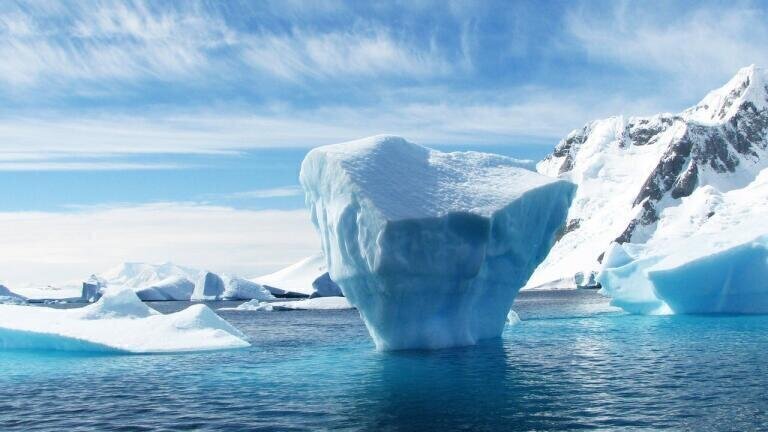
Scientists have been fascinated by icebergs for many years. And why not? They are captivating, majestic and mysterious. Many of the recent discoveries could have huge significance for biology, geology and environmental studies. But, one discovery might surprise you. Icebergs can sing! The question is, why? And - more importantly - could an iceberg impress Simon on X-Factor?
A team working in the University of Chicago first conducted experiments on icebergs and the various sounds they make back in 2003. Their research and the findings they made were unveiled in a 2008 edition of the New Scientist.
The first rumblings of sound were produced by giant icebergs sliding against each other. The scientists likened these sounds to those made by tectonic plates which they were aware were the primary cause of earthquakes. As a result, they coined the term “icequakes”.
The research team at the time had been focused on whether these quakes could help them to understand more about earthquakes and could in fact assist with predicting tremors.
Through their research however it was also discovered that every iceberg had a different sound. These were inaudible to the human ear but when the sound file was sped up, they noticed a particular “song” which was repeated when icebergs hit each other at certain times and at certain areas. As the bergs hit each other in the same place, they made jerking movements which created a brief but definite and unique tune.
Since this initial research, scientists from Poland, the UK and the US have been studying the various noises made by icebergs to assess them. They now believe that not only does each different type of iceberg have its’ own unique acoustic signature but that in studying these signatures, they could learn how much ice is melting and the long term effect this could have on sea levels.
Much of the recent research has taken place on the Hans Glacier in Svalbard and involved the team using high frequency hydrophones (microphones specially developed to capture underwater sounds) to capture the various noises made by icebergs as they move away from the main glacier.
The team then use time lapse photography to assess which sounds are being made at which point in the events surrounding the birth of a new iceberg.
The research has been headed by Dr Oskar Glowacki who confirmed, “We know now that when a submarine event starts, there is a disintegration below the sea surface, there are many cracks, and cracks are propagating and we can listen to this underwater. After this, the ice block detaches from the ice wall and it starts to appear on the surface. And using underwater acoustics, we can identify all stages of this sound."
Much of the research on glacier and iceberg activity currently takes place by satellite. However, there are limitations to this; especially as the satellites can see larger bergs but may miss smaller formation. As a result they miss the data which could be gathered from closer monitoring.
Monitoring the songs of the icebergs could give a much clearer indication of how much ice is being lost and how far climate change is affecting the glaciers.
If you’re fascinated by all things chilly and arctic, you might be interested to read that researchers at the University of Brighton are using Aquaread equipment to monitor river water quality in the extreme environments of the Arctic, including one of Europe's best salmon rivers, in a bid to understand the contrasting water quality requirements of different freshwater ecosystems. For more information, read this article: Water Quality Research in the Arctic.
IET 36.5 Sept/Oct 2026





 Product directory