Environmental laboratory
Published over 10 years ago. See the latest and most current information on Environmental laboratory.
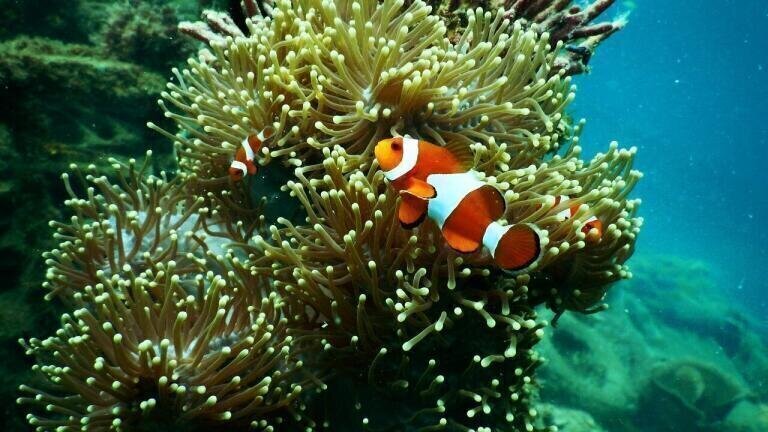
The National Aeronautics and Space Administration (NASA) has earmarked 2016 as the year in which it will take great leaps in mapping out the health of one of our most precious underwater resources: coral reefs. New, sophisticated technology is being employed for the first time as a three-year study will be undertaken to provide a more comprehensive overview of coral reef health than ever before.
Combining both footage from airborne craft and underwater measurements, the team at NASA’s Coral Reef Airborne Laboratory (CORAL) hope to create the largest and most detailed picture of underwater reefs to date, all in a single dataset.
Currently, the information we have on the state of the world’s corals is limited, to say the very least. The majority of it has been gathered from isolated dives, which provides a very blinkered view of the vast network of reefs which cover the seabed around many different islands worldwide.
Eric Hochberg, who works at the Bermuda Institute of Ocean Sciences and is the chief investigator for the CORAL branch of NASA, explains that current methods are simply not good enough.
“Right now, the state of the art for collecting coral reef data is scuba diving with a tape measure,” he said. “It’s analogous to looking at a few trees and then trying to say what the forest is doing.”
Clearly, in order to better understand these water worlds and how human life impacts them, a more comprehensive catalogue of their health is required – which is where CORAL comes in.
CORAL will first use a piece of airborne monitoring equipment called the Portable Remote Imaging Spectrometer (PRISM), which is a highly sensitive piece of apparatus capable of quantifying the amount of light reflected up to it from the ocean below. Since algae gathers mostly on dead coral, the spectral light signatures peculiar to coral and algae will give experts a good idea of the state of the corals monitored.
Meanwhile, another team of scientists will simultaneously perform manual dives in the concerned areas, using physical equipment to corroborate the information gathered by PRISM. This should make for a more accurate view of coral health, and can give us vital information about how the reef has evolved over the years as its environment has undergone changes.
In fact, corals can even act as an archive of environmental and climate change, showing signs of distress or death as conditions fluctuate due to human intervention.
“Reefs respond in complex ways to environmental stresses such as sea level change, rising ocean temperatures and pollution,” Hochberg continued. “The available data were not collected at the appropriate spatial scale and density to allow us to develop an overarching, quantitative model that describes why and how reefs change in response to environmental changes. We need accurate data across many whole reef ecosystems to do that.”
Although the work represents a marked improved on existing studies, it will still only monitor coral networks around Hawaii, Florida, Australia and the Marianna Islands, which means that it will account for a mere 3%-4% of the total reefs around the world. However, if it proves to be a success, it could pave the way for future, more comprehensive studies.
IET 36.5 Sept/Oct 2026




 Product directory