Environmental laboratory
Published over 11 years ago. See the latest and most current information on Environmental laboratory.
This year, the prestigious IIEE / IBM Smarter Planet Challenge award was won by a group of students from University College Cork (UCC) in Ireland. The prize is given out to applicants worldwide who use smart technology to overcome a great challenge facing their local community. And which challenge did the UCC students choose to focus on? The plight of the common honeybee, of course.
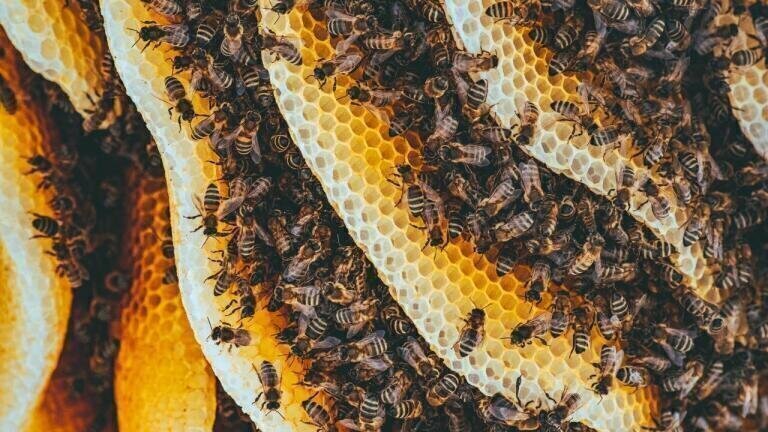
The bee population of the world is falling dramatically, as discussed in detail in Why Are Bees in Decline? This spells trouble for the world as a whole, not just the black-and-yellow contingent of it, since much of the crops we use for agricultural needs (not to mention the vast majority of wild plant life) depend upon pollinators such as bees to cross-pollinate plant species.
One approach to the problem, which is championed by environmentally-conscious organisation the Soil Association, would be to outlaw the pesticides which damage bees and threaten their existence. However, the UCC students took an alternative approach, thinking outside of the box – they decided to create their own hive.
The prototype beehive contains elements of mobile technology, wireless sensor networks, big data and cloud computing, all of which are used to collect data about the beehive. This data ranges from temperature and humidity to oxygen and carbon dioxide levels, as well as the detection of chemical pollutants on the bees themselves. All of the data is encrypted and stored in the beehive – the population of which acts as a further safety measure.
Meanwhile, the beehive garners all of its energy from solar panels, making it environmentally friendly as well as beneficial to the bees. Its inconspicuousness in the bees’ life and its durability in harsher climates means that real-time data can be collected about the bees’ home 24 hours a day. The constraints of daylight hours, heavy rainfall or whole swathes of the year when winter sets in had made such monitoring previously impossible.
The competition demanded that its applicants incorporate one or more of the aspects of big data analysis, cloud computing, cyber security and mobile technologies. In the event, the UCC team incorporated all four while producing an environmentally-friendly product which could go some distance to saving our bees from their endangered status.
The project was jokingly titled “2B OR!(2B): From the Beehive to the Cloud and Back”, a nod to its technological abilities as well as to the playwright William Shakespeare, and scooped the €5,000 prize which was funded by IBM. Besides Shakespeare, the team also gave thanks to the logic and probabilities theories of George Boole, a mathematician working back in the first half of the 19th century.
Though they may not know it, the bees may well have Boole – and the folks at UCC, of course – a lot to thank for.
IET 36.5 Sept/Oct 2026




 Product directory