Environmental laboratory
Published over 10 years ago. See the latest and most current information on Environmental laboratory.
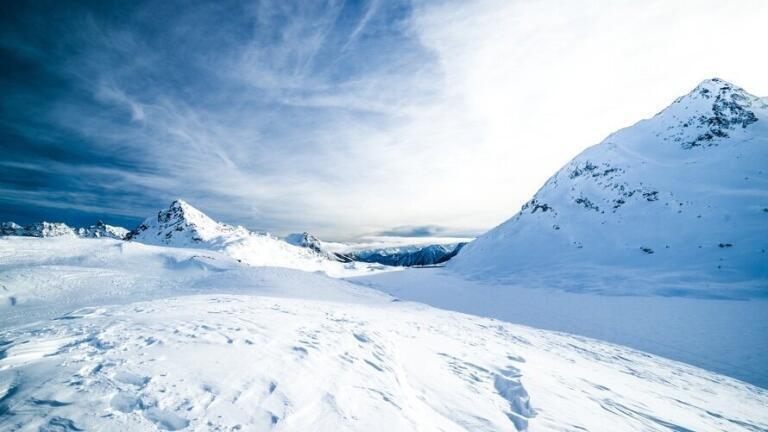
As if the Arctic region didn’t have enough to contend with from manmade climate change, it appears nature is also increasing the rate at which Arctic glaciers are melting. The discovery of algae inside the snow and across its surface is decreasing the substance’s reflectivity – more correctly known as “albedo” – thus allowing it to heat up more quickly.
This phenomenon is known as “watermelon snow” and although it might look pleasing on the eye, the discoloured snow could have catastrophic effects for the future of the North Polar Region.
The Arctic is already in dire straits. The growing problem of climate change might have been addressed at the COP21 summit in Paris last year, at which rulers from around the world agreed that the time for change is now, but global warming is still set to occur on some scale – and nowhere more so than in the northern regions of the world.
In fact, if we disregard the promises made in Paris and continue to consume the remaining reserves of fossil fuels on the planet, the Arctic will be all but obliterated due to localised temperature hikes up to 20°C (double the rate of anywhere else on Earth). Meanwhile, oceanic patterns are dragging warmer water towards the Arctic, thus exacerbating the problem, while Arctic Amplification is causing ice caps to melt earlier and more comprehensively than at any time in history.
As if dealing with manmade problems wasn’t bad enough, the Arctic is also under threat from a naturally-occurring issue. Although it might look like the most inhospitable place on the planet, there are actually some species of algae which can survive and even thrive in these sub-zero temperatures – not wholly unlike the 1,500-year-old moss preserved in Antarctic Ice a few years ago.
These algae are normally a green colour, but in the extreme temperatures of the Arctic, turn a reddish shade, imbuing the same hue into the snow around them. This makes the snow subtly darker and less effective at reflecting the rays of the sun, thus enhancing the rate at which it melts.
Though the algae is dormant in the winter, during the hotter months it multiplies and infiltrates the snow in its surrounding environs, thereby making the problem progressively worse. It might be known by a seemingly innocuous name, but watermelon snow could signal the untimely demise of the Arctic regions.
The detrimental effect which watermelon snow has on glacial regions has been termed “bio-albedo feedback”, since it decreases the snow and ice’s albedo. A new study published in the journal Nature Communications encompasses 21 glaciers in the European Arctic and has concluded that watermelon snow could be very bad for the future of the Arctic, indeed.
In fact, its presence can reduce albedo efficiency by as much as 13%, while around half of the snow in the area is believed to be host to the disruptive algae at the close of summer. This percentage is only expected to increase as the algae thrives and multiplies.
“Our results point out that the “bio-albedo” effect is important and has to be considered in future climate models,” asserted Stefanie Lutz, lead author on the report. What exactly can be done to countermand watermelon snow is as yet unclear – but unless action is taken soon, there may be no Arctic left to worry about.
IET 36.5 Sept/Oct 2026


 Product directory