Environmental laboratory
Published over 9 years ago. See the latest and most current information on Environmental laboratory.
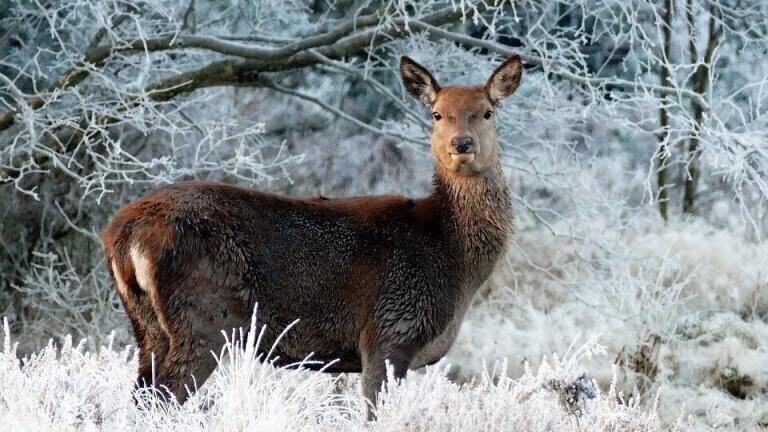
As well as helping Santa Claus to deliver his annual sleighload of presents to children all over the world, it appears that Rudolph and his chums might also be doing their bit in the fight against climate change.
As unlikely as it sounds, an investigation by Swedish researchers has found that grazing patterns of caribou around the Arctic tundra might actually be helping to limit the harmful effects of global warming in a small but potentially significant manner.
Over the last decade or so, climate change has proved to be the bane of the humble reindeer’s existence. As well as having their habitat irrevocably affected by all-time low levels of Arctic Ice, the poor beasts have had to grapple with ever-dwindling food supplies.
This has in turn led to them dropping in weight by a considerable 12% over the last 16 years. What’s more, the heightened temperatures around the North Pole have inadvertently thawed out the corpses of dead reindeer which have become breeding grounds for disease. The contagion of these long-banished infections has resulted in huge culls of the reindeer’s numbers, meaning that manmade climate change is threatening their continued existence.
However, a study published in the journal Environmental Science Letters suggests that the reindeer might now be pawing their way back to safety – one hoof at a time.
The degree of solar energy that is bounced back off the surface of the Earth is known as albedo. Snow and ice have some of the highest albedos on the planet, since their brilliant white surface is excellent at reflecting light and heat energy back up into space. However, when they become covered by undergrowth, this reflective power is reduced.
Led by Dr Mariska te Beest of Umeå University in Sweden, the team of researchers studied the effect that reindeer grazing patterns were having on the rate of thaw of the ground beneath them. It was found that by hoovering up shrubbery and other forms of plantlife that threatened to cover the snow and ice, the reindeers were actually increasing the reflectivity of the land, thus slowing down heat absorption by the Earth and limiting the thaw of the ice.
They arrived at their results by using sophisticated land modelling software and found that reindeer grazing routes in northern Norway had a significant effect on the tundra landscape, which in turn translated into a much greater albedo for the land.
The authors of the study said that although the reindeer’s grazing efforts might seem to represent small scale resistance in the face of such a behemoth as climate change, they were making a vital contribution.
“Our theory was that heavy grazing by reindeer increases summer albedo, through a reduction in shrub height, abundance and leaf area index. The effect reindeer grazing can have on albedo and energy balances is potentially large enough to be regionally important,” explained Dr te Beest.
“Our results show that reindeer have a potential cooling effect on climate, by changing the summer albedo. Although the estimated differences might appear small, they are large enough to have consequences for the regional energy balance.”
IET 36.5 Sept/Oct 2026





 Product directory