Environmental laboratory
Published over 10 years ago. See the latest and most current information on Environmental laboratory.
A joint venture between the Kongsberg Maritime Group, the Norwegian University of Science and Technology and the multinational fossil fuel company Statoil has unearthed a novel new way of performing routine underwater maintenance and repairs: a mechanical snake.
Earlier this year, the collaborative organisation announced Eelume, a serpentine robot capable of self-propulsion, reconnaissance and minor repairs beneath the waves. The idea is still in its infancy but remains an exciting prospect for the future of underwater exploration and engineering.
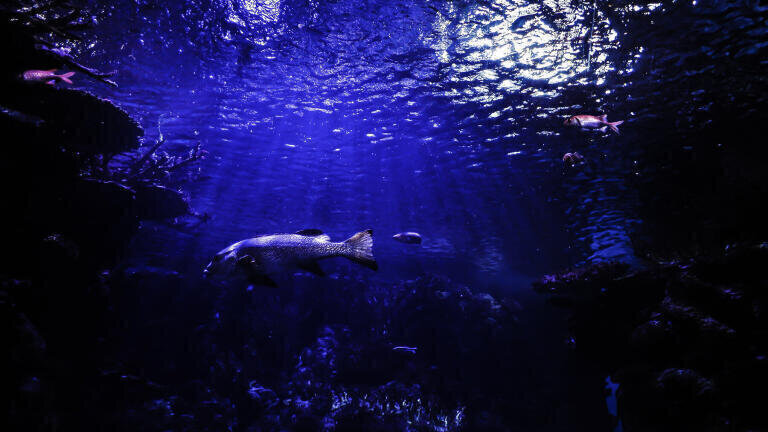
It’s a well-documented fact that we know more about the surface of the Moon and of Mars than we do about the ocean floor – indeed, only a mere 0.05% of the ocean's depths have been mapped in practically useful detail. The main reason for this is the inaccessibility of such locations. As humans, our need to breathe oxygen, our relentless buoyancy and the dangers of water pressure at extended depths make it very hard for us to venture too far beneath the surface of the waves.
Earlier this year, an Italian company pioneered a groundbreaking underwater robot capable of autonomous movement and exploration of depths not currently accessible to us – or at least, not accessible with any ease. While the robot (named Clean Sea) represents an exciting breakthrough in underwater technology, it is still slightly limited in its ability only to gather information.
Eelume, on the other hand, has been perfectly adapted to deal with inhospitable and awkward-to-reach locations. Its serpentine structure makes it ideal for entering into tight spaces and unreachable nooks and crannies, in much the same way a real-life sea snake can. As well as the onboard camera (which relays all manner of information to a crew on dry land) and its built-in thrusters, the snake is also equipped with pincers and other smaller tools designed to undertake lesser maintenance and repair work.
At this point, Eelume is still very far away from being a finished product. However, its flexibility and mobility over static units such as the network of high-frequency sensors used in freshwater lakes, for example, give it a huge advantage. On the other hand, its functional capabilities set it ahead of projects like Clean Sea, as well as all currently existing repair units, which can often be expensive, cumbersome and clumsy to manoeuvre.
Up to this point, one of the device’s main limitations seems to be its reliance on a power cord reaching up above the waves. Of course, in the field, such a cord would drastically reduce the capabilities of Eelume, though surely being able to power and operate the device remotely is not too far away.
Though it remains nothing more than a work in progress at this point, the Eelume is a very real and feasible prospect for the future of underwater engineering and exploration, meaning that hopefully we can add to that 0.05% of mapped terrain before too long.
IET 36.5 Sept/Oct 2026


 Product directory