.jpg)
Business news
Published over 7 years ago. See the latest and most current information on Business news.
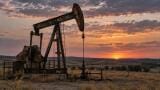
Operations were brought to a halt at the UK’s only fracking site in Lancashire just days after they had begun when seismic activity in the area was detected. Although the initial tremor registered a mere 0.4 magnitude - not large enough to be felt by humans or at surface level - it was enough to bring work to a standstill for the day as a mere precaution, fracking company Cuadrilla said.
However, that minor tremor has since been followed by several more, including two of 0.8 magnitude on the Friday and Saturday after the hiatus and another of 1.1 magnitude at the end of October. The incidents have lent fuel to concerns that fracking could cause large-scale earthquakes in the future and are a reminder why the practice was originally banned on British soil in 2011.
Hydraulic fracturing, or fracking for short, was prohibited seven years ago after a 2.3 magnitude earthquake was recorded on the Fylde coast. A subsequent report concluded that fracking was probably the root cause of the incident, leading the incumbent Conservative Party to ban the practice indefinitely.
However, recent developments within the same government have prompted them to decide that the future of UK gas lies with biomethane and shale, leading to Cuadrilla’s approval to frack in Lancashire. The decision led to a local backlash and widespread protests, with several activists arrested for their exploits. All have since been released.
Despite the prevalent public opinion against fracking, the practice has been reinstated and operations began on Monday 15th October. However, a little more than a week later on Tuesday 23rd, seismic activity was detected that was perceived to be large enough to halt operations for a short period. Indeed, that tremor was apparently the sixth recorded since operations had restarted, though all previous activity was deemed too small to worry about.
According to UK legislation, any tremors between 0 and 0.5 in magnitude incur an amber alert, whereby fracking firms do not have to pause operations but must proceed with caution. Any larger than that results in a red alert and an immediate pause to drilling. Since the initial incident, several larger ones have occurred, leading to concerns that the earthquakes are only likely to become bigger and more dangerous the longer the process is allowed to continue.
For their part, Cuadrilla insist all possible mining safety precautions are being taken and that there is no cause for public concern. “As we have said many times, this level is way below anything that can be felt at surface and a very long way from anything that would cause damage or harm,” said a spokesman for the company. “Well integrity has been checked and verified.”
However, activists are not convinced. “It is only what we’ve been expecting as it is an undisputed consequence of extreme energy extraction,” complained Gail Hodson of campaigning group Frack Free Lancashire. “It highlights the fact that all the regulation in the world, even if it was gold standard, cannot stop seismic activity. The traffic light system was cooked up as a salve to try to reassure the public and those reassurances have come to nothing. The government should place a ban on fracking with immediate effect.”
IET 36.5 Sept/Oct 2026



 Product directory