Business news
Whether it is automated analyses, robot assistants, or AI tools for data evaluation, the digital transformation of the laboratory world is in full swing, but still far from complete. “At analytica, we accompany the transformation and invite visitors to cast a glance inside the laboratory of tomorrow,” says Susanne Grödl, analytica Exhibition Director.
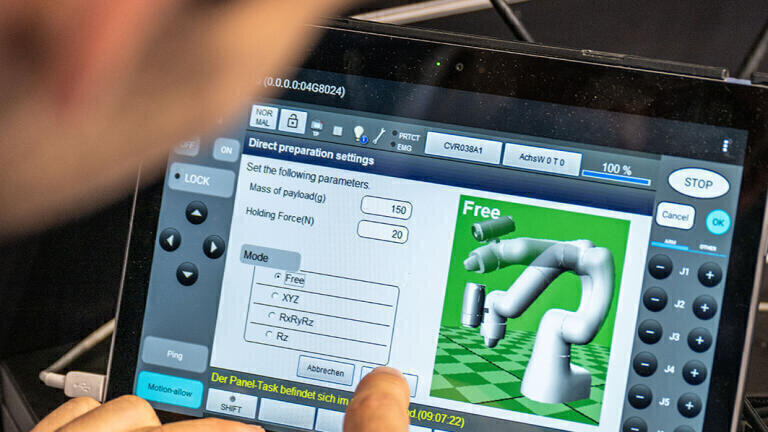
At the analytica special show Digital Transformation, visitors will experience how hardware and software from different manufacturers are combined to make digital work in the laboratory more intuitive and to automate processes. Eighteen exhibitors are taking part in the special show, including industry giants such as Liebherr, Metrohm, Mettler Toledo and Sigma. Together, they will present interactive exhibits and workflows for various application examples: from digitised processes in drinking water, flavour, and fragrance analysis to automated temperature control processes. A special highlight is a cobot from Universal Robots, which places samples into centrifuges and also excels at other tasks.
For digital transformation to succeed, data from different sources must be merged and transformed into a standardised format that both humans and machines can read. The LIMS and Lab Execution System SAMPLES from analytica exhibitor Qualitype support this process, as they offer interfaces for loading and processing data with external tools such as Excel. In turn, analytica exhibitor Splashlake bridges the gap between laboratory equipment and LIMS with an interface that transfers data directly to the LIMS and supports integration with AI-based analysis. Qualitype and Splashlake are also partners of the special show.
Digital transformation and AI methods are also on the program for the science-oriented analytica conference. Several speakers will discuss the knowledge they expect to gain from using artificial intelligence. “AI will not only control the automated laboratory of the future, but also generate new hypotheses or synthesis pathways,” predicts Professor Ulrich Panne, President of the German Federal Institute for Materials Research and Testing in Berlin. He will chair the analytica conference session “Digital Analytical Sciences” on Wednesday morning (March 25) with presentations on self-driving labs and digital tools in mass spectrometry, photonics, and food analysis.
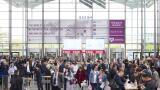
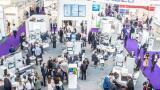
The topics of digitalisation and AI will also be recurring themes across the five exhibition halls, where over 1,000 exhibitors from around the world will present their latest innovations. Systems from Agilent, Bruker, Shimadzu, and many other providers already use machine learning and AI to analyse spectra and other data, for example, in GC/MS analysis, FTIR spectroscopy, or atomic force microscopy. Thermo Fisher recently even entered into a strategic partnership with the software company OpenAI.
In short, all major equipment manufacturers are focusing on AI—and on analytica, the meeting place for the industry. After all, nothing can replace face-to-face discussions, especially in times of digital transformation. “With the combination of world-leading trade fair, conference, and a diverse supporting program, we offer plenty of room for exchange between manufacturers and users, and between representatives from science, industry, and public authorities,” says Susanne Grödl. analytica brings all the players together under one roof and shows them the way into the digital laboratory world.
IET Guide 2026

 Product directory