The field of gas detection has come a long way from its humble beginnings over a century ago.
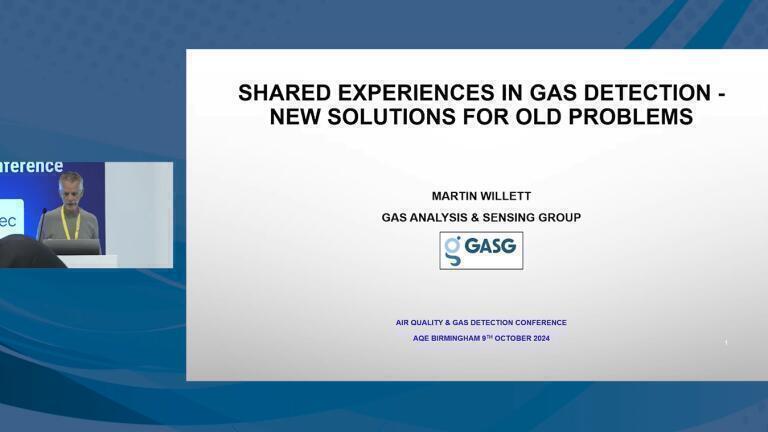
During a recent conference, experts explored the advancements and challenges in gas sensing technologies, highlighting the critical role of innovation in meeting ever-evolving demands.
Led by Martin Willett, the session delved into the applications, methods, and customer needs that drive continuous improvements in gas detection systems.
Gas sensing applications span diverse industries. Each have unique operational environments and requirements.
Whether for safety in industrial settings, environmental monitoring, or medical diagnostics, the demands for precision, sensitivity, and specificity are constantly growing.
Despite advancements, no single detection method meets all needs.
Electrochemical sensors, optical systems, and catalytic detectors each offer distinct advantages. But they also come with limitations that necessitate trade-offs in performance, cost, and functionality.
During the talk, panelists pointed out that innovation in gas sensing often occurs through incremental evolution rather than disruptive breakthroughs.
For example, early thermal conductivity detectors were practical but lacked specificity. This makes them unsuitable for complex applications.
Today, advancements like silicon micro-machined hot plates and miniaturized electronics have transformed these detectors into more efficient and versatile tools.
Similarly, non-dispersive infrared (NDIR) technology has seen significant enhancements.
While early devices relied on thermal sources, modern systems leverage photonic sources like LEDs and lasers for higher efficiency and lower power consumption.
These advancements have broadened the scope of NDIR applications. However, cost remains a limiting factor in widespread adoption.
Electrochemical sensors, which date back to Faraday's experiments in the 19th century, have undergone remarkable transformations.
Once limited by materials and manufacturing challenges, these sensors now benefit from innovations borrowed from other industries; such as catalysts from space program fuel cells and electrode membranes developed for batteries.
Over decades, these sensors have become smaller, more sensitive, and cost-effective. This makes them indispensable in applications like urban air quality monitoring.
Martin Willett concluded with a forward-looking perspective on gas sensing.
Emerging trends include the integration of artificial intelligence, enhanced connectivity, and the deployment of sensor networks.
For instance, low-cost sensor arrays are increasingly used in urban environments to provide real-time pollution data. They offer granular insights for policymakers and residents alike.
This shift from isolated sensors to interconnected systems underscores the growing importance of multidisciplinary collaboration in advancing gas detection technology.
This lecture offers a comprehensive overview of the past, present, and future of gas detection.
From the science behind various methods to real-world examples of innovation, it provides valuable insights for industry professionals, researchers, and policymakers.
Discover how evolving technologies are shaping the future of gas sensing and learn from the expertise of seasoned professionals in the field.
Watch the lecture to explore these topics in greater depth and stay ahead in this dynamic and essential industry.
IET Guide 2026

 Product directory














.jpg)
.jpg)
.jpg)
.jpg)