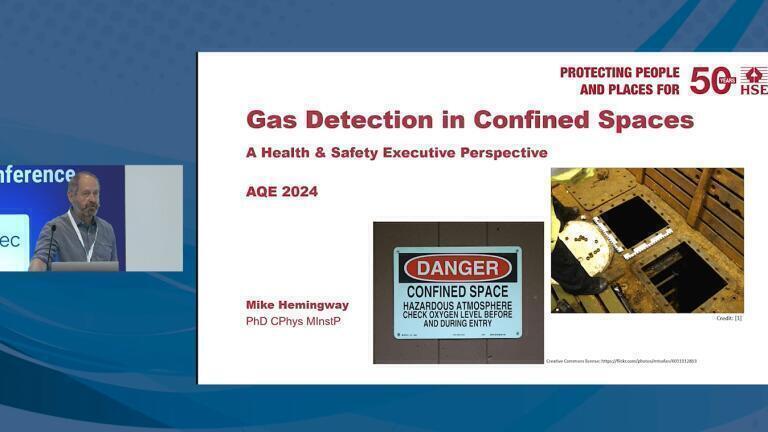
In a recent presentation, Mike Hemingway from the Health and Safety Executive (HSE) shared critical insights into gas detection practices in confined spaces.
The lecture highlighted real-world incidents, their causes, and the lessons they offer to those working in environmental monitoring and safety.
Gas detection in confined spaces is vital to prevent potentially fatal accidents. From chemical processing plants to freight containers, the risks posed by hazardous gases, lack of oxygen, or flammable vapors can be life-threatening.
However, as the presentation illustrates, failures in equipment, training, and procedure often lead to preventable tragedies.
One example discussed was a fatal explosion at a chemical plant. Despite using calibrated gas monitors, workers commenced welding inside a reaction vessel containing undetected toluene vapors.
Investigations revealed that the sampling tube material used slowed the gas's entry to the monitor, and the monitor itself was not properly calibrated for toluene.
Mike underscored that gas detection is far from straightforward.
Variability in gas properties, the compatibility of detection equipment, and environmental conditions all influence accuracy.
For instance, certain gases, such as toluene, are 'sticky' and absorb onto sampling tube materials, delaying detection. Similarly, pre-filters on some monitors may inadvertently remove critical gases from detection.
In another case, workers entering freight containers faced risks from fumigants, reduced oxygen levels, and toxic vapors.
Despite using advanced gas detection tools, including FTIR spectrometers, the complexity of mixed vapors made accurate measurement challenging.
Key takeaways from the presentation included:
Comprehensive training: workers must understand the limitations of gas detection equipment and the hazards of confined spaces. Training should emphasize the importance of proper equipment calibration and bump testing with the specific gases in question
Improved equipment design: manufacturers should provide clearer guidance on equipment use and compatibility. Innovations in sensor technology and calibration techniques could enhance reliability
Proactive monitoring: gas detection should be coupled with robust protocols, such as pre-entry testing and continuous monitoring, to identify hazards early
Enhanced awareness: workers must recognize confined spaces beyond the obvious. Bathrooms, chain lockers, and even seemingly open areas can pose hidden risks.
The speaker concluded by emphasizing that safety begins with awareness and preparation.
For environmental professionals, the message was clear: investing in advanced gas detection systems and comprehensive training saves lives.
Learn more about these critical lessons by watching the full presentation.
IET Guide 2026

 Product directory













.jpg)
.jpg)
.jpg)
.jpg)